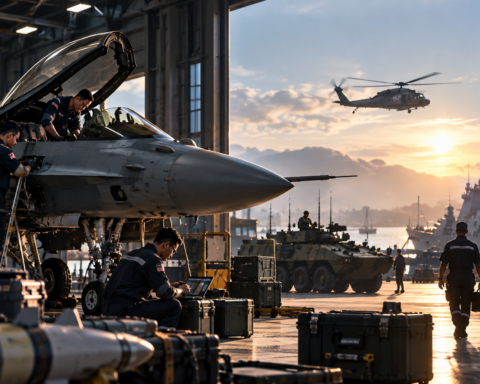
On 28 March 2025, at about 12:50 p.m. local time, a magnitude 7.7 earthquake struck near Sagaing in central Myanmar. By 1 April the death toll had passed 2,900, with about 4,000 more injured. The ASEAN Coordinating Centre for Humanitarian Assistance on disaster management (AHA Centre) raised its emergency operations centre to red alert. Five member states sent military aircraft under the ASEAN Militaries Ready Group on Humanitarian Assistance and Disaster Relief (AMRG on HADR). These included the Royal Malaysian Air Force’s (TUDM) A400M.
The operation showed that ASEAN’s military mechanisms can move when they are needed. Teams from Singapore and Thailand reached Myanmar the next day, and teams from Malaysia and Vietnam arrived on 30 March. For a cross-border operation, that speed was impressive. But for victims buried under rubble, the first hours after the shaking were still decided by those who were already on the spot.
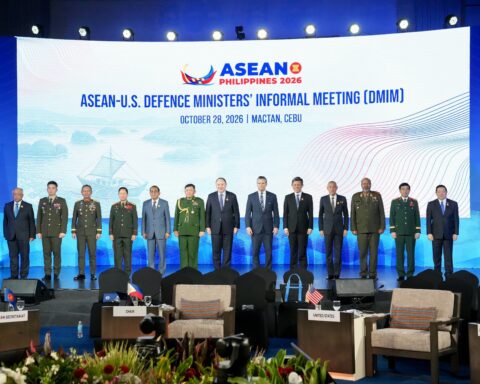
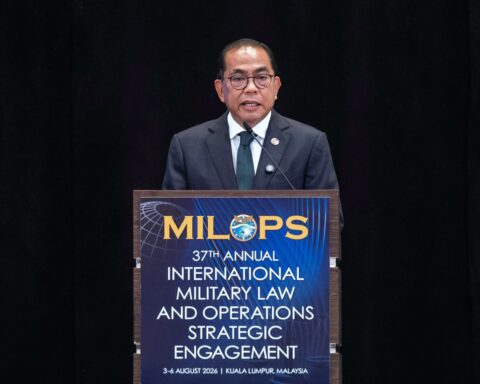
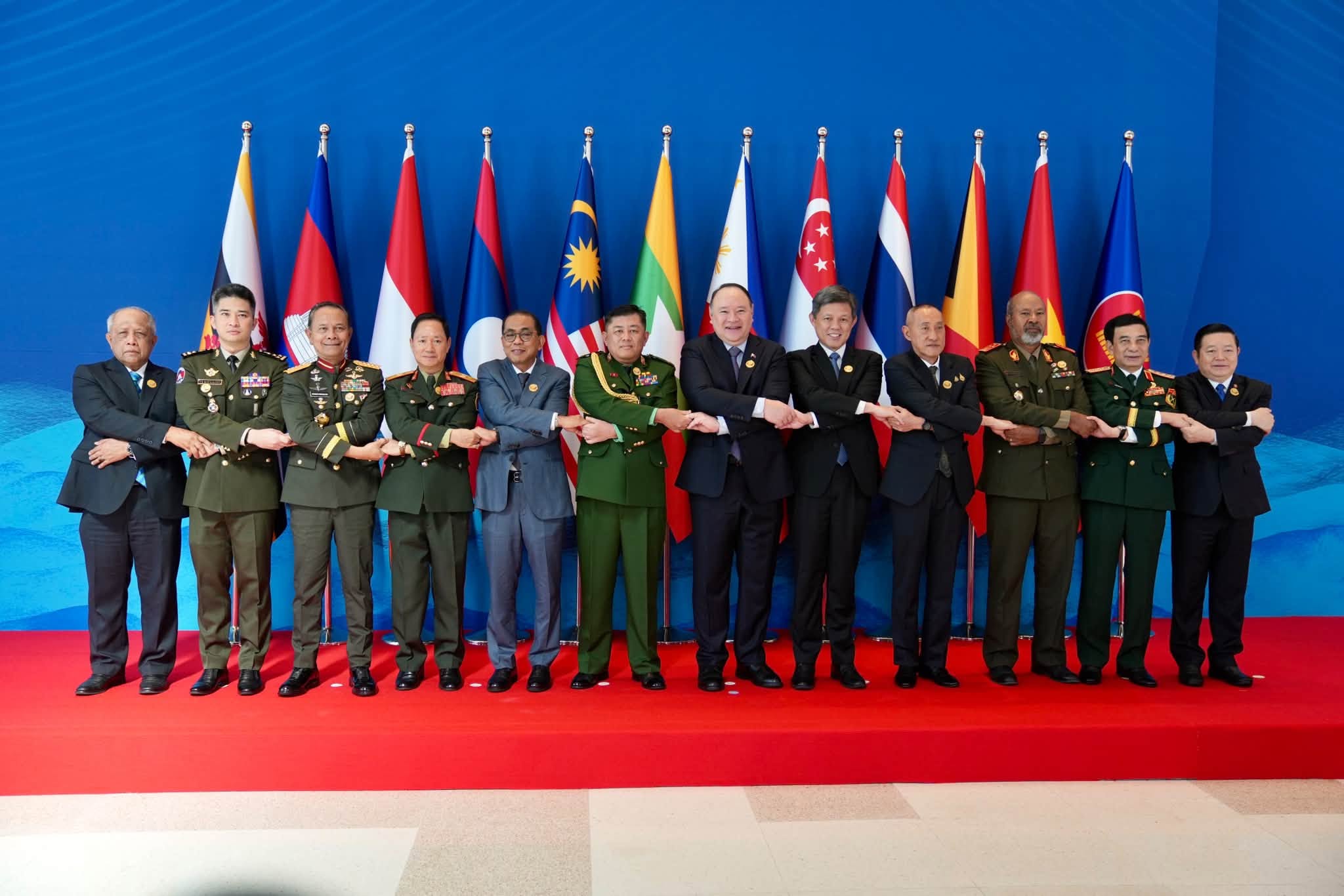
Defence Minister Dato’ Seri Mohamed Khaled Nordin raised this point in his opening remarks at the 20th ASEAN Defence Ministers’ Meeting (ADMM) in Cebu, Philippines, on 28 October 2026. He said the solidarity of ASEAN’s people during disasters must be matched by continuous prevention and preparedness. Non-traditional threats are now real and recur repeatedly. ASEAN’s response must begin with the people, then be backed by strong local and regional capabilities. He also reminded the meeting that no member state, whatever its resources, can handle these challenges alone.
His argument is best read as a chain. The people are at the end closest to the disaster, and the regional mechanisms are at the furthest end. The strength of the chain depends on the links between the two. The question grows more pressing now that the ADMM, launched in Kuala Lumpur in 2006, is entering its third decade. The Defence Minister stressed that the ADMM must be ready to do more than meet new threats with old approaches. He said its measure of success lies in the security and resilience that this cooperation actually produces.
The First Rescuer Is the Neighbour
Japan’s experience offers hard-to-dispute evidence. Japan’s 2024 White Paper on Disaster Management, published by the Cabinet Office, records that in the 1995 Great Hanshin-Awaji Earthquake, about 27,000 trapped people were rescued by neighbours and local groups. That was 77.1 per cent. The rest, about 8,000 people or 22.9 per cent, were rescued by official rescue agencies, including the Japan Self-Defense Forces.
These figures change how we should understand preparedness. Aircraft and ships remain important. But the golden first 72 hours, which search and rescue operations commonly refer to, are largely filled by ordinary citizens. Japan turned this lesson into the principles of “jijo” and “kyojo”, meaning self-help and mutual help. These form the first layer before public assistance, or “kojo”, arrives. The principles are now the basis of Japan’s approach to disaster management, including community-level preparedness drills.
For Malaysia, the policy foundation is already in place. The Mid-Term Review of the Defence White Paper (KSP KPP) continues the Whole-of-Government and Whole-of-Society (WOGOS) approach, while Total Defence places the people as part of national resilience. The next step is to bring this framework down to the level of villages and housing estates. Evacuation drills and local risk maps should be prepared before the monsoon season, and they matter as much as preparing the assets of the Malaysian Armed Forces (ATM).
Regional Aid Depends on the Recipient Country
Between the two ends of the chain lies national capability. The AHA Centre’s 2024 Annual Report recorded 1,755 disaster events in the ASEAN region. They affected about 43 million people and displaced 2.9 million residents. Economic losses were estimated at USD 3.4 billion. Floods alone accounted for 1,046 events, almost 60 per cent of the total. In other words, almost five disasters occur every day in this region.
At that frequency, most disasters are handled entirely by each country’s own agencies. Regional mechanisms are activated only when a disaster’s scale exceeds a country’s capacity. Even then, regional assistance moves only as fast as the recipient country is ready to receive it. Foreign military aircraft need diplomatic clearance to land. Relief supplies must clear customs. Rescue teams need local coordinators who know where they are most needed.
Malaysia has an advantage that should be used to the full. The United Nations Humanitarian Response Depot (UNHRD) in Subang was one of the dispatch points for supplies to Myanmar in 2025. This position opens the way for Malaysia to serve as a regional relief logistics hub. The condition is that clearance procedures and civil-military coordination must be simplified from the outset and tested before a real disaster occurs.
From Documents to Readiness
At the regional level, the groundwork has also been laid. At the 19th ADMM in Kuala Lumpur on 31 October 2025, held under the Defence Minister’s chairmanship, the AMRG on HADR Standard Operating Procedure (SOP) was welcomed as an annex to Chapter VI of the SASOP, ASEAN’s standard procedures for joint disaster relief operations. The guiding principle is “One ASEAN, One Response”. The concept paper for the ASEAN Defence Search and Rescue Exercise (ADSARX) was also adopted.
Joint exercises are also growing larger. Exercise Trident Resolve in Banten, Indonesia, from 20 to 26 September 2026, brought together about 2,200 military personnel and civilian officials from 19 countries. For the first time, three Experts’ Working Groups (EWGs) of the ASEAN Defence Ministers’ Meeting-Plus (ADMM-Plus) joined in a single field exercise, including the cyber security EWG. The scenario was an earthquake followed by an Anak Krakatau eruption and a tsunami.
But documents and exercises are only half the answer. The other half lies in member states’ willingness to make commitments that can be measured. Each country should set aside ready assets that can be deployed within 24 hours, complete with diplomatic clearance and customs release agreed in advance. Without such commitments, the SOP will remain a procedure on paper, and the speed of aid will continue to depend on negotiations held while the disaster is under way.
The Defence Minister placed the people at the front end of regional preparedness, and that ordering is right. The ADMM turns 20 in 2026, and two decades of cooperation have built trust among its members. That trust now needs to be turned into readiness that victims on the ground can feel. People’s preparedness at the village level must be built alongside military assets at the regional level.
Disasters move faster than meetings. ASEAN must prepare earlier than disasters arrive.