
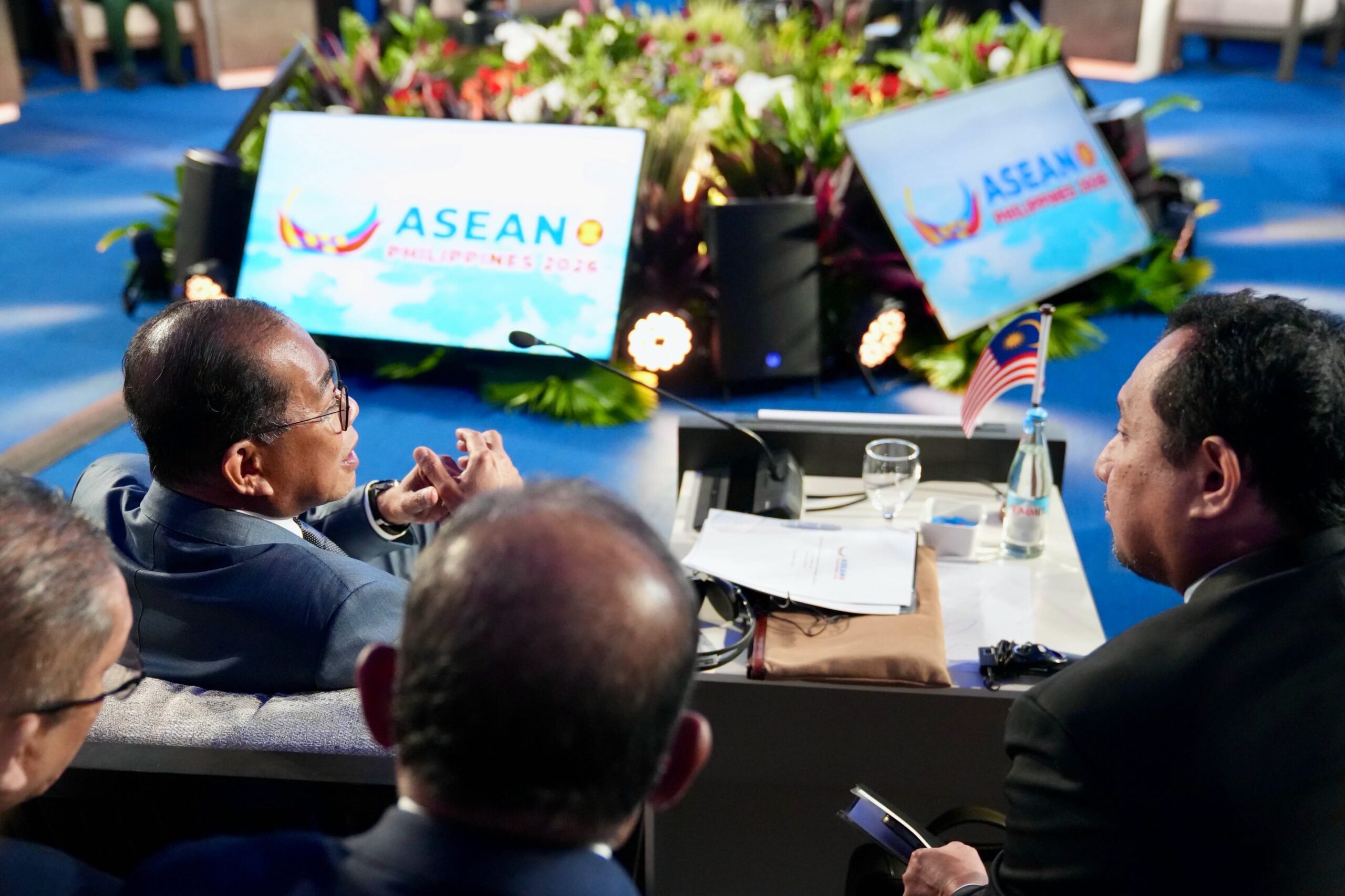
On 13 July 2012, the ASEAN Foreign Ministers’ Meeting in Phnom Penh ended with something that had never happened in the organisation’s 45-year history. The ministers went home without a joint statement. They could not agree on how to refer to an incident in the South China Sea in the meeting’s final document. The deadlock also cast a shadow over efforts to draft a code of conduct for those waters.
The episode is often remembered as the moment ASEAN came closest to splitting. Its lesson was costly but clear. Maritime disputes rarely bring down a regional organisation directly. The danger comes quietly, when the dispute begins to decide whether member states can still speak with one voice. The question today is whether ASEAN has truly learned from Phnom Penh.
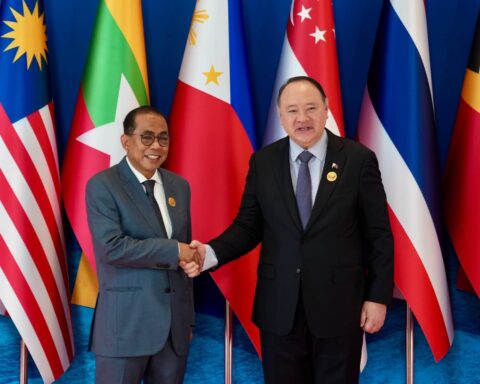
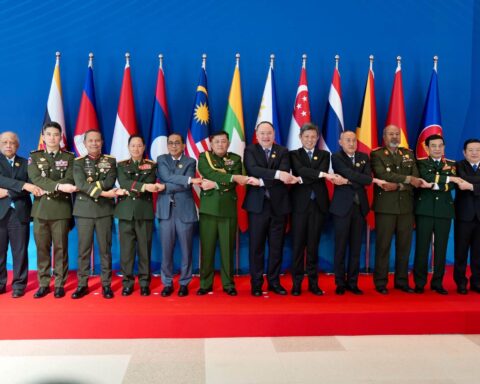
Fourteen years later, Malaysia brought that question to Cebu, the Philippines. Speaking at the 20th ASEAN Defence Ministers’ Meeting (ADMM) on 28 October 2026, Defence Minister Dato’ Seri Mohamed Khaled Nordin described the South China Sea as one of the greatest tests of ASEAN’s unity and credibility. Malaysia’s answer was firm. Every claimant state has legitimate interests to defend. But differences in interests and positions in the dispute must be managed so that member states can still reach consensus and work together to keep the region peaceful.
The Cost of Conflict Is Borne by All
That position rests on a very practical calculation. ChinaPower, a research project at the Center for Strategic and International Studies (CSIS), a Washington think tank, estimated that trade worth about USD 3.4 trillion passed through these waters in 2016. That is about 21 per cent of world trade. The figure makes the South China Sea more than a border dispute. It is one of the arteries of world trade. For Malaysia, which shares these waters and depends heavily on trade, its stability bears directly on the national economic interest.
The world has already seen what happens when a route this important is disrupted. After attacks on merchant ships in the Red Sea began in late 2023, the United Nations Conference on Trade and Development (UNCTAD) reported that transits through the Suez Canal fell by 42 per cent within two months. Merchant ships had to sail around the Cape of Good Hope at the southern tip of Africa. Shipping costs rose, and the effects were felt by producers and consumers in countries not involved in the conflict at all. Conflict at sea crosses borders easily.
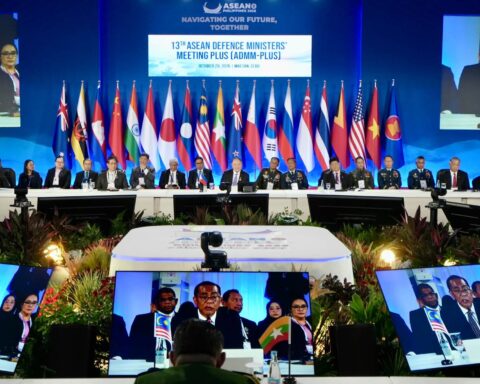
The Defence Minister also took this lesson from the Red Sea disruption to the 13th ASEAN Defence Ministers’ Meeting-Plus (ADMM-Plus) on 29 October. When a dispute turns into armed conflict, other countries feel the effects through disrupted shipments and higher trade costs. ASEAN therefore needs to put dialogue first, so that disputes in the South China Sea can be contained before they lead to conflict. If trade routes in those waters are disrupted as they were in the Red Sea, the claimant states themselves will also bear the economic losses.
Different Interests, Staying United
Awareness of the cost of conflict alone is not enough to unite countries whose claims overlap. How has ASEAN managed to stay united for almost six decades? International relations scholars have long tried to answer this. In 1957, the Prague-born American political scientist Karl Deutsch introduced the concept of a security community. It refers to a group of states whose members have stopped expecting to settle their differences through war.
More than four decades later, the concept was brought to Southeast Asia by Amitav Acharya, a professor of international relations at American University in Washington. The India-born scholar is among the most widely cited researchers of ASEAN. He argued that ASEAN built its security community through norms of dialogue and peaceful dispute settlement, cultivated since 1967. Over time, those norms became habits, and the habits made disputes among members easier to manage.
In other words, ASEAN stays united because its members are skilled at managing differences, even though those differences always exist. Malaysia’s stance in Cebu rests on the same understanding: ASEAN’s strength is built through dialogue and consensus. Unity in this sense is a strategic asset built through practice. Like any asset, its value can erode if neglected, and Phnom Penh 2012 proved it.
Malaysia itself has a record that brings these norms to life. The dispute with Indonesia over Pulau Sipadan and Pulau Ligitan was taken to the International Court of Justice (ICJ), which decided it on 17 December 2002. The dispute with Singapore over Pedra Branca (Batu Puteh) was decided by the same court on 23 May 2008. Malaysia ultimately respected both rulings, including the one that did not fully favour it, and relations with both neighbours remained strong.
Malaysia’s experience of settling disputes peacefully strengthens its credibility in calling for the same approach in the South China Sea. Malaysia stresses that all parties must exercise restraint and resolve disputes on the basis of the 1982 United Nations Convention on the Law of the Sea (UNCLOS). This approach, which puts dialogue and cooperation first, is in line with the Credible Partnerships pillar of the Mid-Term Review of the Defence White Paper (KSP KPP). The importance of regional unity was also affirmed through the Kuala Lumpur Joint Declaration on ASEAN Unity for Security and Prosperity, which the ADMM adopted on 31 October 2025 while Malaysia chaired the meeting.
The Code of Conduct Must Be Meaningful
If UNCLOS sets out each state’s rights, a Code of Conduct (COC) is needed to regulate behaviour at sea. The Declaration on the Conduct of Parties in the South China Sea (DOC) was signed in Phnom Penh in 2002. Negotiations based on a single draft text began in 2018. ASEAN and China later set 2026 as the target for completing the negotiations, and Malaysia is committed to helping finalise them.
Almost 24 years after the DOC was signed, the wait for a COC can raise doubts about progress in the talks. But the code’s effectiveness depends on its content and on how it is implemented once signed. For that reason, the Defence Minister called for the effective and substantive finalisation of the COC to be expedited and given the highest priority. The code needs clear rules so that one party’s actions at sea can be understood by the others. This can reduce the risk of an action being misread as a threat and provoking a reaction that turns a minor incident into a crisis.
For personnel of the Royal Malaysian Navy (TLDM) and the Malaysian Maritime Enforcement Agency (APMM), who face situations at sea every day, this need is very concrete. The code must include protocols for preventing incidents and channels for immediate communication between maritime agencies. Most importantly, it must be fully implemented after it is signed. A code that is strong on paper but weak on the water would only add one more document to the long history of these negotiations.
ASEAN’s strength at the negotiating table also depends on the discipline of its own members. Every time a member state chooses a unilateral step that contradicts the common position, the bloc’s negotiating position is weakened. Differences in interests between claimant states and others do exist. The lesson of Phnom Penh is clear. Those differences must be managed inside ASEAN’s meeting rooms and kept from becoming an open split in front of negotiating partners.
The position Malaysia took to Cebu is sound and deserves support. ASEAN will turn 60 on 8 August 2027. Almost six decades of peace came from deliberate choices and sustained dialogue, and cannot be taken as guaranteed. The Defence Minister’s hope that the ASEAN passed to future generations will be more united than the one inherited demands the same courage from every member state.
ASEAN once failed to speak with one voice in Phnom Penh. The South China Sea now demands that ASEAN prove it has learned the lesson.
Shah Mohd Akmal Abdul Halim is a lecturer in the Department of Social Sciences and Humanities, College of Continuing Education (CCEd), Universiti Tenaga Nasional (UNITEN).






[…] his article (https://www.naratif.online/strengthening-regional-unity-to-address-the-south-china-sea-disputes/), Shah Mohd Akmal Abdul Halim stated that the danger to ASEAN comes quietly, when a dispute begins […]