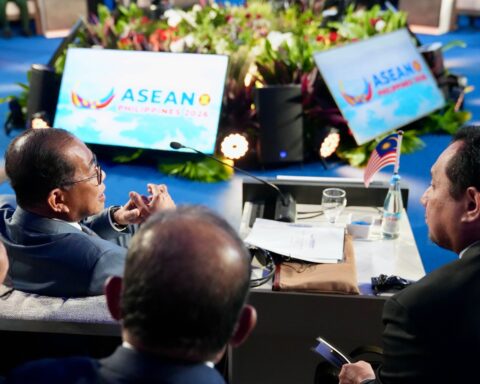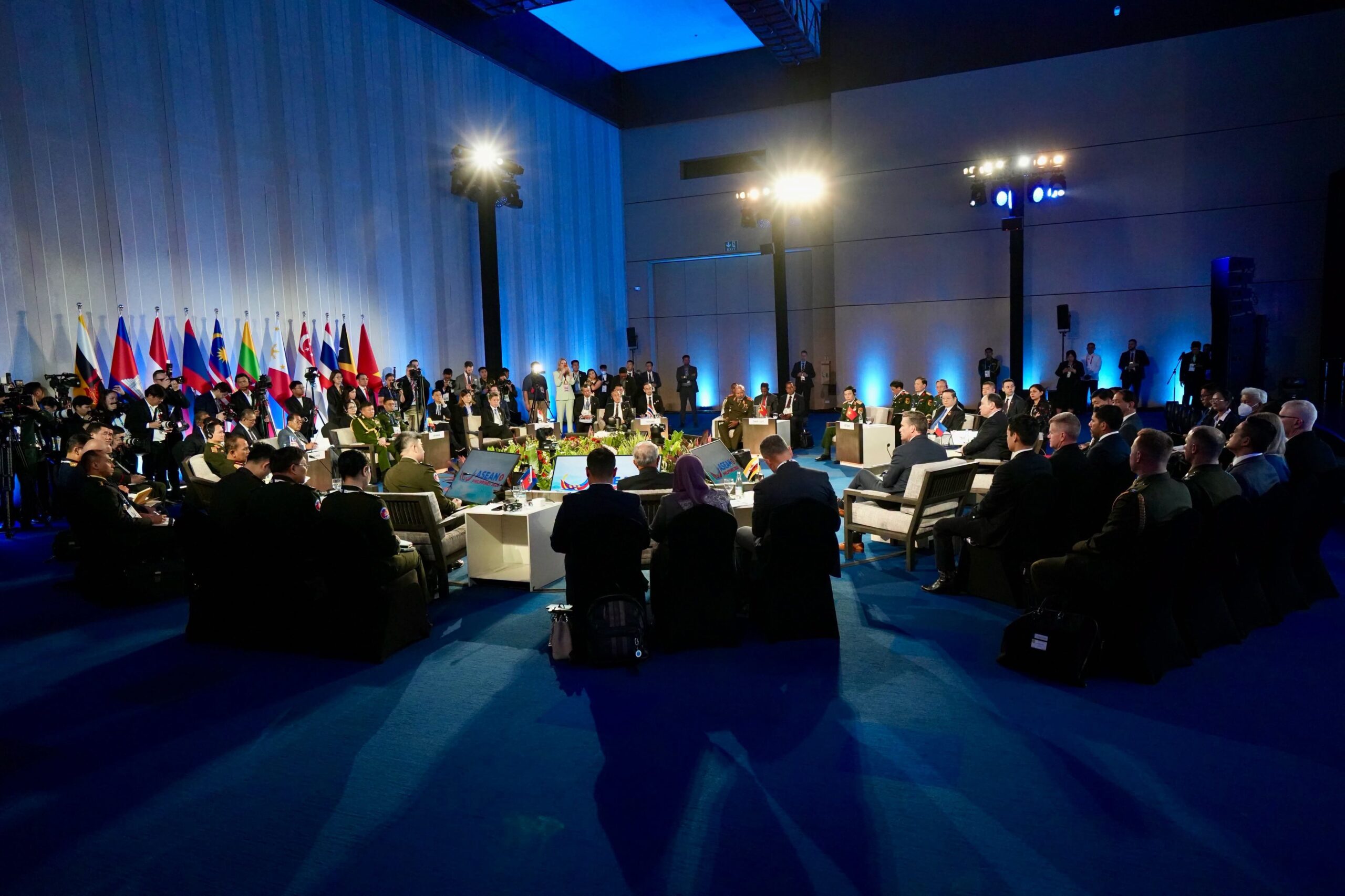
At the 20th ASEAN Defence Ministers’ Meeting (ADMM) on 28 October, Defence Minister Dato’ Seri Mohamed Khaled Nordin called the South China Sea one of the greatest tests of ASEAN’s unity and credibility. He said every claimant state has its own interests, but differences must be managed amicably so that tensions do not escalate into regional conflict.
💰 Economic stakes
About USD 3.4 trillion in trade, roughly 21 per cent of world trade, passed through these waters in 2016, according to the CSIS ChinaPower project.
📜 Lesson of Phnom Penh
In his article (https://www.naratif.online/strengthening-regional-unity-to-address-the-south-china-sea-disputes/), Shah Mohd Akmal Abdul Halim stated that the danger to ASEAN comes quietly, when a dispute begins to decide whether members can still speak with one voice. In 2012, ASEAN foreign ministers failed to issue a joint statement for the first time in the bloc’s history. He wrote that unity is a strategic asset built through dialogue and consensus.
In this regard, he noted that Malaysia accepted the International Court of Justice (ICJ) rulings on Pulau Sipadan and Pulau Ligitan (2002) and Pedra Batu Puteh (2008), including the one that did not fully favour it, and that ties with Indonesia and Singapore remained strong. He stated that this strengthens Malaysia’s call for restraint and for disputes to be settled under UNCLOS.
🤝 Code of Conduct
In his remarks at the ADMM-Plus, attended by all ASEAN member states and its eight Plus partners (the US, Russia, China, Japan, Australia, South Korea, India and New Zealand), Mr Khaled urged that the Code of Conduct (COC) be finalised effectively and as a top priority.
Shah Mohd Akmal stated that the COC needs clear rules, incident-prevention protocols and direct communication channels between maritime agencies.
He added that it must be fully implemented once signed, so that it is not strong on paper but weak on the water.