“What the US intervention into Venezuela has demonstrated is that for all the support that the PRC (People’s Republic of China) provides – economically, politically, diplomatically – at least when it’s far away, there’s little that Beijing can practically do if other actors so choose to sort of intervene and try to reconfigure the politics.”
Chong Ja Ian
“Neutrality,” in the rhetoric of geopolitics, is commonly presented as a moral disposition or juridical stance: a refusal to align, a declaration of independence from great-power rivalry. In international law textbooks, diplomatic communiqués, and media commentary, it appears as an abstract principle, a sovereign choice insulated by norms and treaties. Yet neutrality is rarely a moral or legal predicate; it is a material condition, a structural relation rooted in economic position and class power. It is shaped less by the intentions of governments than by the capacities of states to produce, distribute, and defend surplus independently of external authority. Structural autonomy, measured in terms of productive diversification, technological capability, fiscal independence, and the ability of subordinate classes to shape and control production, is the sine qua non of effective neutrality. Without these conditions, neutrality is not protection but exposure as a condition that peripheral and semi-peripheral states repeatedly fail to navigate successfully when geopolitical rivalry intensifies.
History provides instructive cases. Belgium before the First and Second World Wars was formally neutral, its neutrality guaranteed by treaties and acknowledged by European powers. Yet the nation occupied a strategic corridor between contending imperial blocs and possessed an economy deeply integrated and subordinate to the capitalist circuits of Germany, Britain, and France. Belgian exports in 1913 exceeded 40 percent of GDP, an unusually high ratio for the period, signaling both industrial sophistication and structural vulnerability. Neutrality collapsed under the pressure of military necessity, revealing the limits of legal and moral guarantees against the imperatives of accumulation and power. Similarly, Laos and Cambodia after the 1954 Geneva Accords were declared neutral in a Cold War environment characterized by bipolar rivalry, proxy conflicts, and the militarization of underdevelopment. At the time, more than 80 percent of the population in both countries was engaged in subsistence agriculture, industrial output accounted for less than 10 percent of GDP, and state revenues were overwhelmingly reliant on external aid. Neutrality was nominal; it did not confer security. In Laos, U.S. aid alone often exceeded domestic fiscal capacity. By the late 1960s and early 1970s, massive aerial bombardments transformed these states into theaters of proxy war. Neutrality here was structurally insufficient, exposing the deep integration of peripheral economies into broader hegemonic circuits.
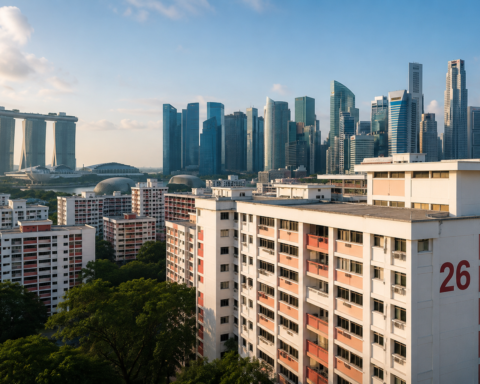
Contemporary small states continue to confront analogous dynamics. Singapore is frequently invoked as a model of successful neutrality and openness, yet its position within global capitalism reproduces structural dependence in highly sophisticated forms. Total trade has remained between 300 and 330 percent of GDP for decades, making Singapore one of the most trade-dependent states in the world. Manufacturing and services are dominated by multinational corporations: foreign firms account for roughly two-thirds of manufacturing value added, particularly in electronics, pharmaceuticals, and precision engineering. Domestic firms participate mainly as intermediaries or suppliers within transnational production networks. Foreign capital penetration is correspondingly deep; foreign direct investment stocks have, at points, exceeded 300 percent of GDP. Singapore’s GDP per capita surpasses US$80,000 in purchasing-power terms, yet headline wealth masks structural constraints. Total factor productivity has stagnated: between the early 2000s and the late 2010s, labor productivity growth averaged barely 1 percent per year, insufficient to sustain long-term income growth without continued inflows of labor and capital.
The labor structure compounds dependency. Non-resident workers account for between 30 and 40 percent of the labor force, concentrated in construction, shipyards, domestic services, and segments of manufacturing. This enables substitution of imported labor for domestic upgrading and technological innovation, suppressing wage pressures while postponing the creation of endogenous productive capacity. Singapore’s neutrality between the United States and China is materially conditional. China accounts for roughly 15 percent of trade, while the United States remains central to finance, security, and technology access. Neutrality is operationalized through delicate balancing: strategic alignment is contingent on mutual tolerance by external powers rather than grounded in independent capacity. Any disruption to trade, financial flows, or security arrangements would expose structural vulnerabilities immediately. Neutrality, in this sense, is not a sovereign choice; it is a negotiated equilibrium maintained by dependence.
Venezuela demonstrates the converse scenario. While Singapore’s fragility emerges from hyper-integration into global capitalism, Venezuela’s arises from mono-export dependence. Oil accounted for 90–95 percent of exports and more than 50 percent of government revenue for decades. High oil prices provided rents allowing for social redistribution without diversification. Manufacturing remained stagnant, agriculture contracted, and imports replaced domestic goods. Between 2013 and the early 2020s, falling oil prices and intensifying sanctions precipitated a GDP contraction exceeding 65 percent. Oil production declined from 2.5 million barrels per day to below 1 million. Hyperinflation destroyed currency functions, and real wages collapsed. While domestic governance choices influenced outcomes, the economy’s structural dependence rendered formal sovereignty hollow. Neutrality and political independence collided with capitalist hegemony. Sanctions activated existing vulnerabilities rather than creating them.
These historical and contemporary cases illuminate the broader principle: neutrality is not a formal juridical status but a contingent relation determined by position within global accumulation. States embedded in peripheral or semi-peripheral structures face asymmetric risks: economic dependency, technological subordination, and security reliance all impose constraints on policy autonomy. Marxist political economy explains this as the result of uneven development inherent in global capitalist circulation. Capital accumulates at centers, generating technological and fiscal dominance, while peripheral states provide labor, resources, and markets. Wealth is extracted and redistributed according to power, not law. Consequently, neutrality is only meaningful when states possess internally rooted productive forces capable of sustaining economic and strategic autonomy.
The political-economic structures in Singapore and Venezuela exemplify these dynamics. Singapore’s high trade dependence (over 300 percent of GDP), non-resident labor share (≈39 percent), and foreign capital penetration (FDI stocks >300 percent of GDP) are sources of resilience and prosperity but simultaneously expose it to structural coercion. Conversely, Venezuela’s mono-export dependence and limited industrial diversification rendered sanctions and price shocks existential threats. Both cases demonstrate that formal sovereignty cannot substitute for material autonomy. Neutrality is effective only when it is underpinned by domestic capacity capable of generating and controlling surplus independently of external forces.

Productive autonomy also entails redistribution of risk and opportunity. In Singapore, social stability relies on asset appreciation, labor segmentation, and state-managed housing rather than endogenous productivity and wage growth. Median real wages have stagnated while wealth concentrates in property and financial assets. This reproduces dependence: the state manages stability for capital but privatizes insecurity for households. In Venezuela, excessive reliance on oil rents reproduced elite dependency on external finance and markets, constraining the ability of the majority to influence production and accumulate domestic capability. Neutrality, in both contexts, is a function of class relations: the capacity of subordinate classes to generate and control productive forces is essential to converting formal sovereignty into material autonomy.
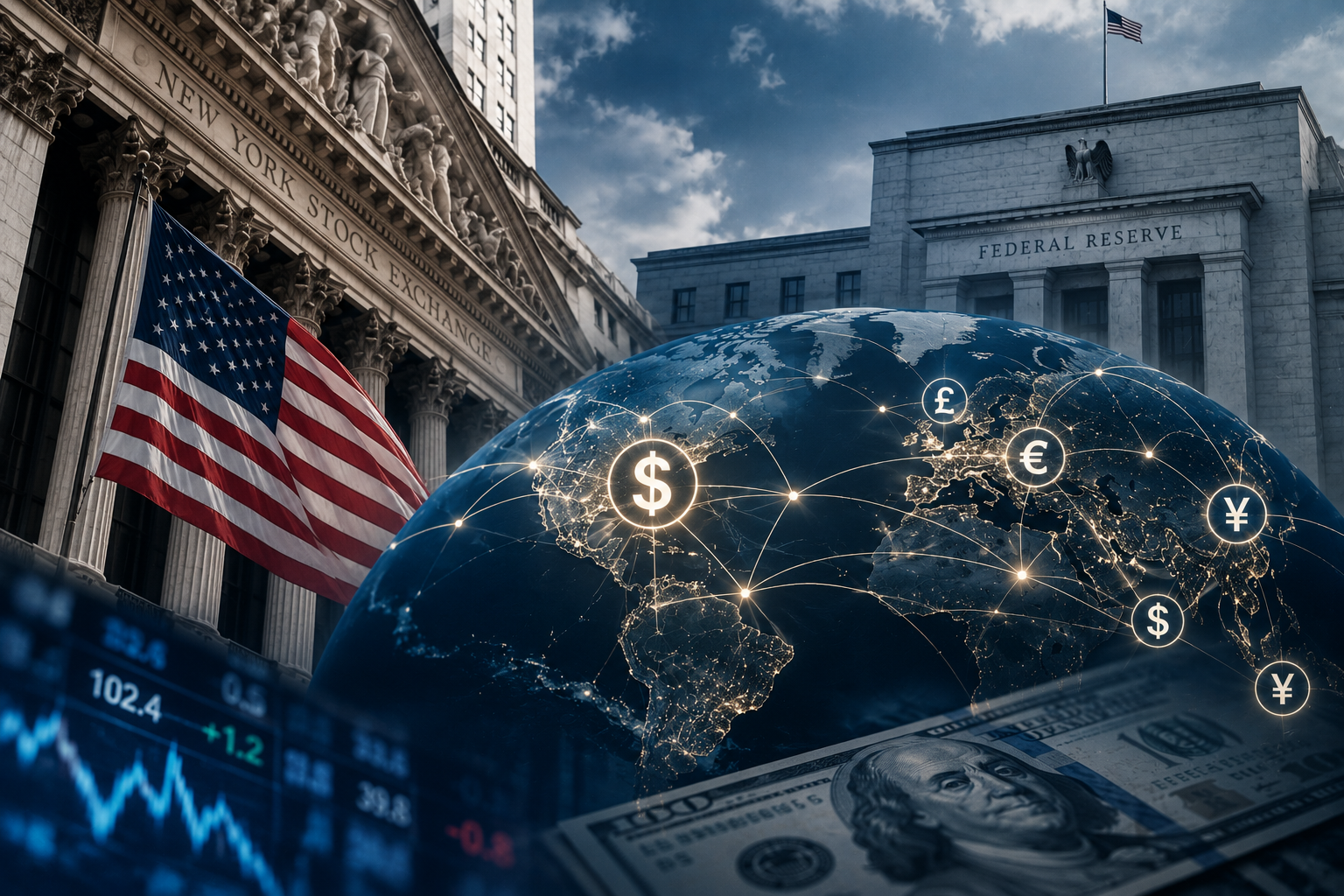
The contemporary international system amplifies these dynamics. The U.S.–China rivalry deploys instruments of economic statecraft — tariffs, investment controls, technology screening, and currency influence — to shape alignments. Singapore, deeply integrated into both trading and financial networks, must navigate these pressures carefully. Venezuela, less integrated but highly dependent on a single commodity, was exposed to targeted coercion. Structural dependence, not ideology, defines the limits of autonomy. Neutrality thus becomes a navigation of dependency rather than an expression of freedom: the ability to maintain it is a function of economic diversification, productive capacity, and class agency. True material autonomy requires the internal generation and control of productive forces, broad-based participation in economic decision-making, and redistribution of risk across society. States must cultivate diversified industries, technological capability, and domestic demand. They must strengthen labor capacity to shape production rather than merely supply cheap labor. Only then can neutrality be a viable strategy, protected by the material power to resist external coercion and not merely by treaties, norms, or diplomatic posturing.
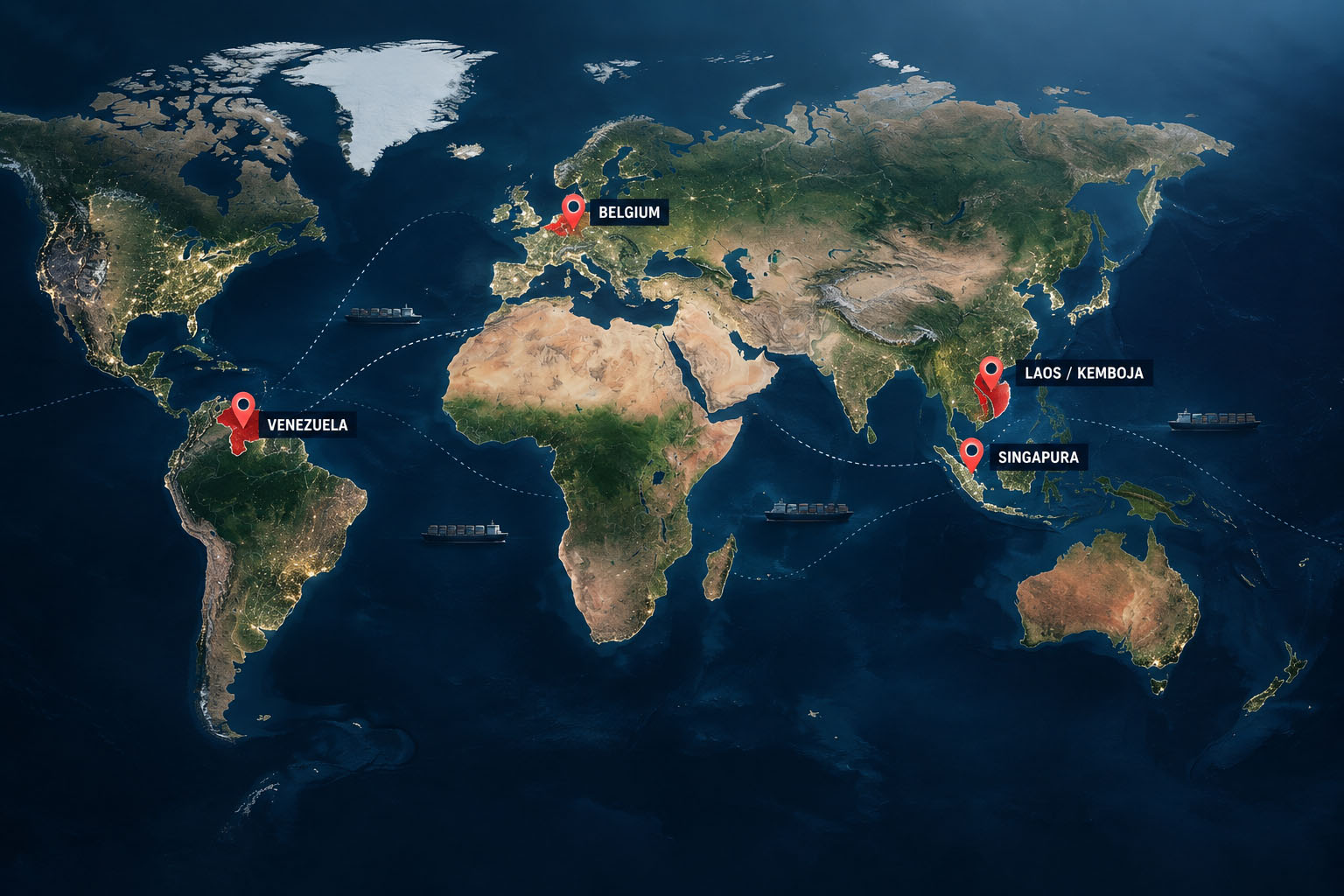
The lesson of history is stark. Belgium, Laos, Cambodia, Singapore, and Venezuela illustrate that neutrality without productive and technological autonomy is a precarious strategy. Dependence produces vulnerability, and exposure is a structural outcome of global capitalist circuits. High income or advanced institutions do not substitute for material autonomy. Formal sovereignty is fragile when it is underwritten by dependence. Material power — capacity to produce, redistribute, and defend — is the prerequisite for meaningful neutrality and true strategic independence. In the absence of these conditions, states occupy a brittle terrain: prosperity appears robust in statistics, yet underlying capacities are contingent on global flows and the tolerance of dominant powers. The transition from formal sovereignty to material autonomy is the essential task for small and semi-peripheral states. Neutrality is a function of structural power: it is effective only when states possess the productive capacity, fiscal independence, and class-based control to sustain economic and strategic decision-making. Singapore demonstrates that integration without domestic capability postpones but does not eliminate exposure. Venezuela demonstrates that resource dependence without diversification exposes states to external coercion even under nominal sovereignty. Across time and space, the same principle emerges: accumulation, dependency, and the limits of sovereignty define the possibilities for small-state neutrality. Without internal autonomy, formal neutrality is an illusion; with it, states can assert independence in the international system and convert declared sovereignty into material control over their own destinies.
Formal Sovereignty and Material Subordination
Before the First World War, Belgium proclaimed neutrality under international guarantees issued by the Concert of Europe. This neutrality was codified in treaties, recognized diplomatically, and frequently cited as evidence that small states could secure sovereignty through law rather than power. Yet Belgium’s geographical position between rival continental powers rendered this neutrality structurally untenable. Situated astride the principal corridors linking Germany to France and the North Sea, Belgium occupied a space whose strategic value far exceeded its capacity to defend or control. Its sovereignty was formally recognized but materially contingent. When Germany’s Schlieffen Plan demanded rapid movement across Belgian territory in 1914, neutrality was not debated or renegotiated; it was simply overridden. The invasion was not an aberration or a moral lapse but a predictable outcome of imperial competition operating within a capitalist system that subordinated legal commitments to strategic necessity.
Belgium’s experience exposes a fundamental contradiction between juridical sovereignty and material power. In the decades before the war, Belgium was described as a successful small industrial state. By 1913, it ranked among the world’s leading exporters of steel, textiles, and machinery, with exports accounting for roughly 40 percent of national income. Its industrial productivity rivaled that of much larger powers, and its financial sector was deeply integrated into European capital markets. Yet this very integration intensified vulnerability: Belgium’s economy depended on uninterrupted trade flows, foreign markets, and stable continental relations. Neutrality, far from insulating Belgium, locked it into a system in which its territory became a resource to be appropriated when accumulation and military logic demanded it. The guarantees of great powers were credible only so long as they aligned with those powers’ interests. When they ceased to do so, neutrality was revealed as a legal fiction resting upon a fragile material base. The First World War thus demonstrated that neutrality cannot be understood independently of the geopolitical and economic structures in which it is asserted. Belgium’s neutrality was not violated because it was weak morally or diplomatically, but because it lacked the capacity to deter or absorb the consequences of great-power conflict. Its sovereignty existed on paper, but its territory existed in space — and space, under conditions of imperial rivalry, is never neutral. The war did not destroy Belgian neutrality so much as expose its limits.
A similar pattern unfolded, under different historical conditions, in Southeast Asia following the Second World War. The decolonization of Indochina coincided with the consolidation of Cold War bipolarity, transforming the region into a site of intense strategic competition. The 1954 Geneva Accords attempted to impose a legal and diplomatic settlement on this volatile environment. Laos and Cambodia were declared neutral states, formally removed from the direct military contest between the United States and its allies on one side, and the People’s Republic of China and the Soviet bloc on the other. On paper, neutrality was meant to provide these newly independent states with breathing space: time to consolidate sovereignty, rebuild economies devastated by colonial extraction and war, and avoid entanglement in ideological conflict. In material terms, however, Laos and Cambodia entered neutrality from positions of extreme structural weakness. In the mid-century, both economies were overwhelmingly agrarian. In Laos, more than 85 percent of the population depended on subsistence agriculture, with industry contributing less than 10 percent of gross domestic product. Cambodia’s situation was only marginally different, with rice cultivation dominating economic life and manufacturing limited largely to small-scale processing. State revenues were minimal, infrastructure sparse, and administrative capacity thin. Both states relied heavily on external assistance to finance basic government functions. Neutrality in this context did not rest on autonomy; it rested on dependence.
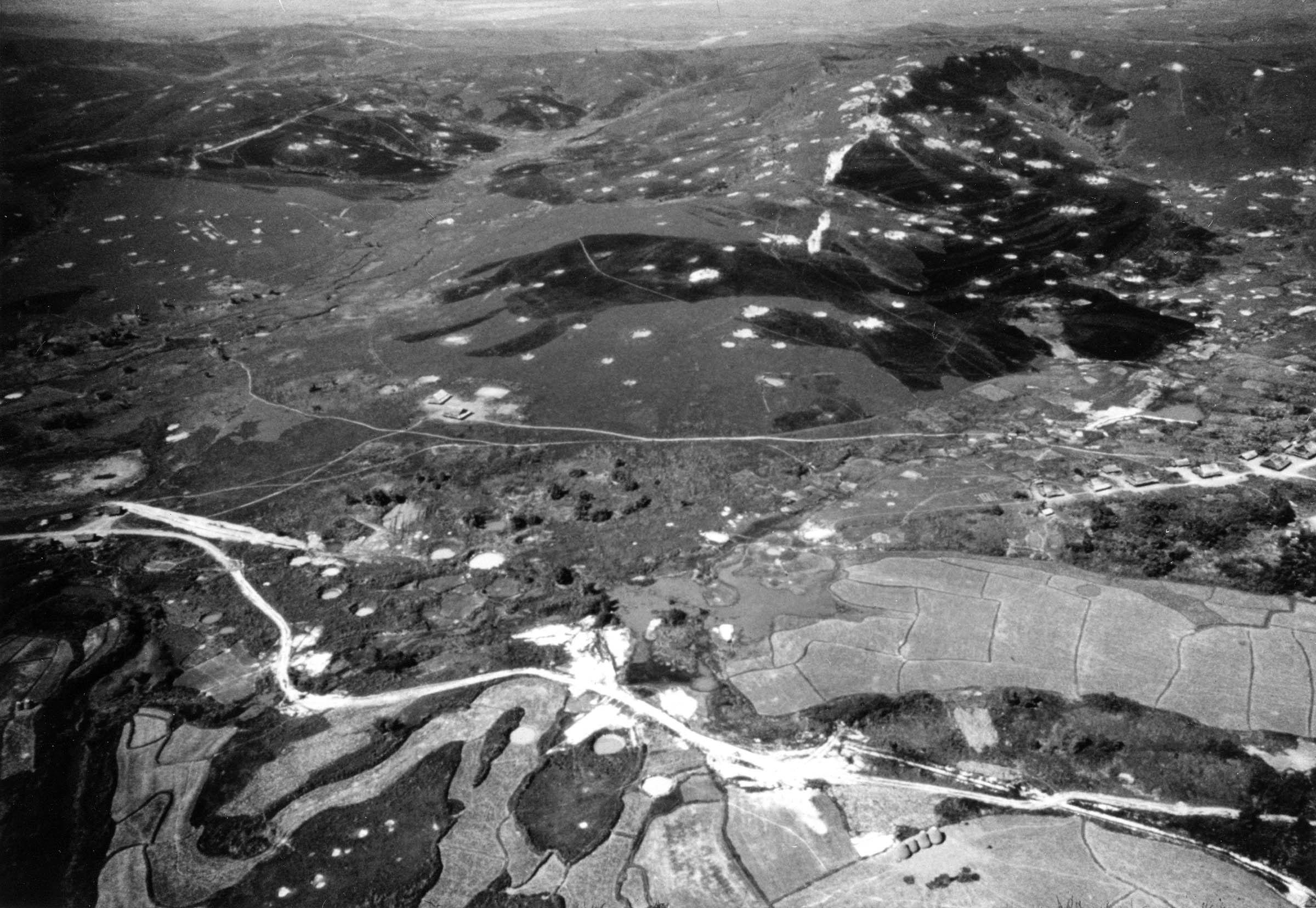 This dependence was not neutral in its effects. Aid flows were politically conditioned, military advisors operated under the guise of development assistance, and domestic political struggles were rapidly internationalized. In Laos, U.S. economic and military aid at times exceeded total domestic fiscal capacity, effectively embedding the state within the strategic apparatus of a superpower while maintaining the formal language of neutrality. Cambodia, under Prince Norodom Sihanouk, attempted a more explicit balancing act, seeking assistance from both socialist and capitalist blocs while proclaiming strict non-alignment. Yet this strategy was viable only so long as external powers tolerated it. By the late 1960s, tolerance evaporated. The intensification of the Vietnam War transformed Indochina into a single strategic theater. Cambodia’s territory was increasingly viewed by U.S. planners as a logistical extension of Vietnamese revolutionary forces, regardless of Phnom Penh’s official position. Between 1969 and 1973, U.S. forces carried out extensive aerial bombardment of eastern Cambodia, a campaign largely concealed from the American public. Laos experienced an even more extreme form of violation: over roughly a decade, it became the most heavily bombed country per capita in history, with millions of tons of ordnance dropped on a largely rural society lacking both the means of defense and the capacity to absorb such destruction. These outcomes were not accidental, nor can they be explained solely by diplomatic miscalculation or leadership failure. They reflected the structural reality that neutrality, when asserted by states lacking productive autonomy, military deterrence, and control over their economic surplus, becomes functionally irrelevant in moments of imperial confrontation. The legal designation of Laos and Cambodia as neutral did not remove them from the logic of Cold War accumulation and security competition; it merely disguised their incorporation into it. Neutrality served as a rhetorical buffer, not a material shield.
What unites Belgium, Laos, and Cambodia is the manner in which neutrality collapses under pressure when it is not underwritten by power. In all three cases, neutrality was guaranteed or recognized by stronger states, yet these guarantees proved conditional. The violation of neutrality was rationalized after the fact as necessary in terms of military, strategic, or balance-of-power imperatives. From a materialist perspective, this pattern is predictable. Capitalist geopolitics operates not through respect for abstract principles, but through the pursuit of accumulation, security, and strategic advantage. Neutrality survives only where it does not obstruct these imperatives. These historical episodes also underscore the role of uneven development in shaping the fate of small states. Belgium, though industrially advanced, was geographically exposed and strategically indispensable to rival empires. Laos and Cambodia, though politically independent, were economically peripheral and militarily weak, embedded in regional struggles they could not control. In each case, neutrality functioned less as an assertion of agency than as a reflection of constrained choice. The smaller the state and the deeper its dependence, the narrower the margin within which neutrality can be exercised. Neutrality thus appears not as an equal option available to all states, but as a privilege unevenly distributed within the world system. Core states, or those with substantial productive and military capacity, may adopt forms of non-alignment that are respected precisely because they are costly to violate. Peripheral states, by contrast, encounter neutrality as a fragile and often illusory status, tolerated only so long as it aligns with the interests of dominant powers. When those interests shift, neutrality is reinterpreted, overridden, or erased.
The lesson of Belgium, Laos, and Cambodia is therefore not simply historical but structural. Neutrality without autonomy does not suspend the pressures of global competition; it intensifies exposure to them. Legal recognition cannot substitute for productive capacity, and diplomatic posture cannot compensate for asymmetric power relations. In a world shaped by capitalist accumulation and imperial rivalry, small states are never simply neutral. They are positioned within trade networks, security architectures, and hierarchies of production, and it is this position, not any formal declaration, that determines their vulnerability. These cases caution against treating neutrality as a timeless solution or a moral high ground. They suggest instead that neutrality is historically contingent, viable only under specific material conditions. Where those conditions are absent, neutrality may delay confrontation, but it cannot prevent it. The fate of Belgium before the world wars and of Laos and Cambodia during the Cold War illustrates a recurring truth of international political economy: sovereignty proclaimed without structural power is sovereignty on loan, revocable at the discretion of those who command the decisive levers of force and accumulation. In this sense, neutrality reveals rather than resolves the contradictions of the international system. It exposes the gap between formal equality and material inequality among states, between the universal language of law and the particular realities of power. For small and dependent states, the challenge is not merely to declare neutrality, but to confront the deeper question of how autonomy can be constructed in a world structured against it. Without such construction, neutrality remains what it was for Belgium, Laos, and Cambodia: a promise repeatedly broken by history.
Strategic Balancing Under Conditions of Uneven Power
Singapore’s position in global capitalism unsettles any naïve understanding of neutrality as a freely chosen diplomatic posture. On the surface, the city-state appears uniquely insulated from the vulnerabilities that afflict small or peripheral economies. Nominal GDP per capita now exceeds US$80,000, placing Singapore among the wealthiest societies globally. Foreign exchange reserves consistently exceed US$300 billion, ranking among the largest worldwide on a per-capita basis. The state’s sovereign wealth vehicles, Temasek Holdings and GIC, manage combined assets that rival or exceed annual GDP, with Temasek’s portfolio alone valued at over S$400 billion in recent years. Singapore’s port remains one of the busiest nodes in global trade, handling over 600 million tonnes of cargo annually before the pandemic and maintaining its status as a critical transshipment hub linking East Asia, South Asia, and Europe. The financial sector, accounting for roughly 14 percent of GDP, functions as a regional clearinghouse for capital flows, wealth management, and multinational treasury operations. By conventional metrics, this is not the profile of a weak or marginal state.
Yet these indicators conceal a deeper structural fragility rooted in the very model that produced them. Singapore’s development has been organized around an extreme form of outward-oriented accumulation, in which growth is achieved through deep integration into global circuits of capital, trade, and labor rather than through the cultivation of an autonomous domestic accumulation regime. Exports of goods and services routinely exceed 170 percent of GDP, a ratio unmatched by most advanced economies and indicative not merely of competitiveness but of structural dependence on external demand. Foreign direct investment stocks are multiples of GDP, reflecting Singapore’s role as a platform economy for multinational capital rather than a nationally embedded industrial system. The manufacturing and services sectors anchoring output are dominated by foreign firms and state-linked enterprises, with limited diffusion of productivity gains into the wider domestic economy.
Labor dynamics reveal the structural character of this growth model with particular clarity. By 2023, non-residents comprised approximately 39 percent of the total workforce, up from around 25 percent in the late 1990s. In absolute terms, the foreign workforce more than doubled between 2000 and 2019. This reliance on imported labor has been decisive not only in construction, cleaning, logistics, and care work, but across segments of manufacturing and services where wage discipline has been maintained through administrative controls rather than productivity upgrading. While headline employment levels have remained strong, the labor share of national income has declined over time, reflecting redistribution toward capital and asset owners. Median real wage growth for resident workers has been modest, particularly in non-tradable sectors, and frequently lags aggregate productivity gains concentrated in capital-intensive enclaves such as finance and pharmaceuticals.
Total factor productivity performance further underscores the limits of Singapore’s accumulation strategy. During the early decades of industrialization, productivity growth averaged around 2 percent annually, driven largely by technological transfer, scale expansion, and state coordination. Since the mid-2000s, however, TFP growth has been volatile and often negligible, dipping into negative territory in several periods outside a narrow set of high-value sectors. Between 2010 and 2019, average annual TFP growth hovered near zero. Services productivity, where the majority of residents are employed, has consistently lagged that of OECD peers, averaging below 1 percent per year in the decade preceding the pandemic. Growth has continued, but increasingly in an extensive rather than intensive form: more labor, more capital, more throughput, rather than deeper efficiency or innovation.
Domestic demand patterns reinforce this structural diagnosis. Household consumption accounts for only about 36 percent of GDP, a strikingly low figure for an advanced economy. This reflects high compulsory savings through the Central Provident Fund, asset-based welfare mechanisms, and a social policy regime that shifts risk onto households. While this configuration supports macroeconomic stability and capital accumulation, it suppresses internal demand and constrains the emergence of a robust domestic market capable of buffering external shocks. Singapore’s persistent current-account surplus, often exceeding 15 percent of GDP, signals strength, but it also indicates an economy structurally oriented toward external absorption of surplus, leaving it exposed to fluctuations in global trade, finance, and geopolitics.
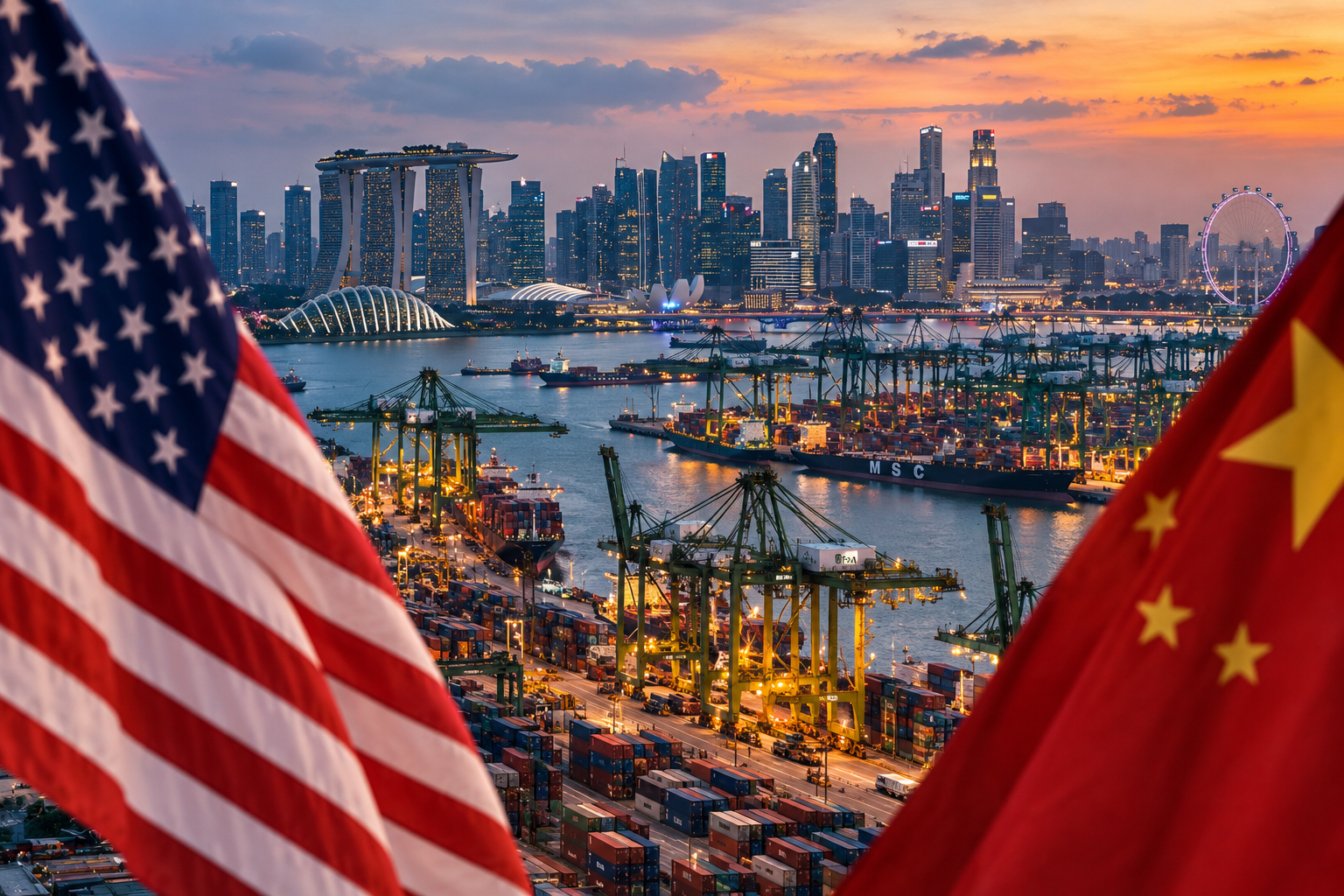 It is within this context that Singapore’s posture of neutrality in the U.S.–China rivalry must be understood. Official discourse emphasizes balance, pragmatism, and non-alignment: Singapore is a founding member of ASEAN, participates in U.S.-led security architectures, maintains close defense ties with Washington, and simultaneously engages deeply with China through trade, investment, and Belt and Road–linked projects. China is Singapore’s largest trading partner, while the United States remains a critical source of investment, technology, and security guarantees. The state’s foreign policy rhetoric frames this as strategic autonomy: “friends with all, enemies with none.”
This posture is less an expression of sovereign choice than a reflection of structural constraint. Singapore’s economic model requires continued access to both U.S.-centric and China-centric circuits of accumulation. Any significant rupture — through trade decoupling, technology sanctions, financial restrictions, or security escalation — would transmit immediate and severe shocks through the economy. As a financial hub integrated into dollar-denominated systems, Singapore is particularly vulnerable to extraterritorial sanctions and regulatory pressure emanating from the United States. As a trade-dependent manufacturing and logistics node, it is equally exposed to disruptions in China-centered supply chains. Neutrality, under these conditions, is not an equilibrium but a narrow corridor constantly managed. The paradox is that Singapore’s economic strength amplifies rather than diminishes vulnerability: deep integration into global capitalism increases exposure to its contradictions. The same openness that enables growth also reduces insulation. Administrative capacity allows swift response to shocks, but cannot eliminate the underlying asymmetries of power embedded in the world system. Formal sovereignty coexists with substantive dependence on external markets, capital, technology, and security architectures controlled by larger powers.
Singapore’s condition mirrors, in attenuated form, the experiences of other states seeking neutrality under uneven development. Belgium before the world wars was economically advanced yet strategically exposed, rendering neutrality unenforceable once imperial rivalries intensified. Laos and Cambodia, declared neutral after the 1954 Geneva Accords, lacked the productive and military capacity to sustain autonomy and became sites of proxy warfare. Venezuela’s contemporary predicament — marked by dependence on oil rents, financial sanctions, and geopolitical isolation — illustrates how formal sovereignty can be hollowed out when accumulation is externally constrained. Singapore is not Venezuela, nor is it Laos or Belgium in a direct historical sense. Its state capacity is greater, its economy more diversified, its institutions more coherent. Yet the underlying lesson remains: neutrality is viable only insofar as it is underwritten by autonomous productive capacity and structural leverage. Without these, neutrality becomes contingent on the tolerance of stronger powers. Singapore’s leverage lies not in military power or resource control, but in its role as an indispensable node in global capital circulation. This grants bargaining space, conditioned by capital rather than popular sovereignty.
The political implications of this arrangement are significant. The PAP’s governance model — centralized, technocratic, and managerial — has been effective in navigating external constraints, but reinforces internal rigidity. By prioritizing predictability and control, it limits the social and political experimentation necessary for a transition toward productivity-led growth and deeper domestic capability. Innovation, whether economic or political, entails disruption. Yet disruption threatens the delicate balance upon which Singapore’s neutrality depends. The result is a system inclined toward optimization within existing parameters rather than transformation beyond them. Economic might, measured in aggregates, masks dependence on global conditions over which the state exercises limited influence. Neutrality becomes less a shield than a strategy of risk management within a hierarchical international order. As U.S.–China rivalry intensifies, the margin for such management narrows. Pressures to align, explicit or implicit, will increase, and the costs of miscalculation will rise. The Singapore paradox, therefore, is not that a small state seeks neutrality in a polarized world, but that a wealthy, administratively powerful state remains structurally constrained by the very system that enabled its ascent. Its challenge is not the absence of capacity, but the limits imposed by a mode of accumulation privileging openness over autonomy, stability over experimentation, and integration over insulation. Whether Singapore can transcend these limits by deepening domestic productive capability, redistributing risk, and expanding political feedback will determine whether neutrality remains a viable strategy or becomes, as history often shows, a prelude to coercion.
Venezuela in the Crosshairs: The Limits of Resource Sovereignty
The dynamics of sovereignty, neutrality, and development in contemporary global capitalism are inseparable from the structural relations that position states within the world system. While conventional accounts often emphasize legal recognition, diplomatic skill, or state capacity, a political-economy perspective insists that sovereignty and autonomy are materially grounded in productive capacity, class structures, and integration into global accumulation networks. Singapore and Venezuela provide instructive contrasts in this regard, demonstrating how economic might and resource abundance do not necessarily translate into structural independence, and how peripheral states remain vulnerable to coercion when their productive and technological capacities are externally constrained.
Singapore’s position in global capitalism unsettles any naïve understanding of neutrality as a freely chosen diplomatic posture. On the surface, the city-state appears uniquely insulated from vulnerabilities that afflict small or peripheral economies. Nominal GDP per capita now exceeds US$80,000, placing Singapore among the wealthiest societies globally. Foreign exchange reserves consistently surpass US$300 billion, ranking among the largest worldwide on a per-capita basis. The state’s sovereign wealth vehicles, Temasek Holdings and GIC, manage combined assets rivaling or exceeding annual GDP, with Temasek’s portfolio alone valued at over S$400 billion in recent years. Singapore’s port remains one of the busiest nodes in global trade, handling over 600 million tonnes of cargo annually before the pandemic, and maintaining status as a critical transshipment hub linking East Asia, South Asia, and Europe. The financial sector, accounting for roughly 14 percent of GDP, functions as a regional clearinghouse for capital flows, wealth management, and multinational treasury operations. By conventional metrics, this is not the profile of a weak or marginal state.
Yet these indicators conceal a deeper structural fragility rooted in the very model that produced them. Singapore’s development has been organized around an extreme form of outward-oriented accumulation, in which growth is achieved through integration into global circuits of capital, trade, and labor rather than through the cultivation of an autonomous domestic accumulation regime. Exports of goods and services routinely exceed 170 percent of GDP, a ratio unmatched by most advanced economies and indicative not merely of competitiveness but of structural dependence on external demand. Foreign direct investment stocks are multiples of GDP, reflecting Singapore’s role as a platform economy for multinational capital rather than a nationally embedded industrial system. Manufacturing and services sectors anchoring output are dominated by foreign firms and state-linked enterprises, with limited diffusion of productivity gains into the wider domestic economy. Labor dynamics reveal the structural character of this growth model. By 2023, non-residents comprised approximately 39 percent of the workforce, up from around 25 percent in the late 1990s, with absolute numbers doubling between 2000 and 2019. This reliance on imported labor has been decisive across construction, logistics, cleaning, care work, and even segments of manufacturing and services, where wage discipline is enforced through administrative controls rather than productivity upgrading. While headline employment levels remain high, the labor share of national income has declined, reflecting redistribution toward capital and asset owners. Median real wage growth for resident workers has been modest, particularly in non-tradable sectors, lagging productivity gains concentrated in finance and pharmaceuticals.
 Total factor productivity further underscores the limits of Singapore’s accumulation strategy. During early industrialization, productivity growth averaged around 2 percent annually, driven by technological transfer, scale expansion, and state coordination. Since the mid-2000s, TFP growth has been volatile and often negligible, dipping into negative territory outside a narrow set of high-value sectors. Between 2010 and 2019, annual TFP growth hovered near zero. Services productivity, where most residents are employed, consistently lagged OECD peers, averaging below 1 percent per year in the decade before the pandemic. Growth continued, but increasingly in an extensive rather than intensive form: more labor, more capital, more throughput, rather than deeper efficiency or innovation. Domestic demand patterns reinforce this diagnosis. Household consumption accounts for roughly 36 percent of GDP — a strikingly low figure for an advanced economy — reflecting high compulsory savings through the Central Provident Fund, asset-based welfare mechanisms, and social policies shifting risk onto households. While this configuration supports macroeconomic stability and capital accumulation, it suppresses internal demand and constrains the emergence of a domestic market capable of buffering external shocks. Persistent current-account surpluses, often exceeding 15 percent of GDP, indicate strength but also dependence on external absorption of surplus, leaving the economy exposed to global trade, finance, and geopolitical fluctuations.
Singapore’s posture of neutrality in U.S.–China rivalry must be understood within this structural frame. Official discourse emphasizes balance, pragmatism, and non-alignment: Singapore is a founding ASEAN member, participates in U.S.-led security architectures, maintains close defense ties with Washington, and simultaneously engages deeply with China through trade, investment, and Belt and Road–linked projects. China is Singapore’s largest trading partner, while the United States remains a critical source of investment, technology, and security guarantees. The state’s foreign policy rhetoric frames this as strategic autonomy: “friends with all, enemies with none.” Yet this posture is less an expression of sovereign choice than structural constraint. Singapore’s model requires continued access to both U.S.-centric and China-centric circuits of accumulation. Trade decoupling, technology sanctions, financial restrictions, or security escalation would transmit immediate and severe shocks. Integrated into dollar-denominated systems, Singapore is particularly vulnerable to extraterritorial sanctions. As a trade-dependent logistics node, it is equally exposed to disruptions in China-centered supply chains. Neutrality is not equilibrium but a narrow corridor constantly managed. The paradox is that Singapore’s economic strength amplifies vulnerability: deep integration into global capitalism increases exposure to contradictions. Administrative capacity allows swift responses, but cannot eliminate embedded asymmetries of power. Formal sovereignty coexists with substantive dependence on external markets, capital, technology, and security architectures controlled by larger powers.
Venezuela provides a complementary but inverted case study. Its resource wealth is immense: at the beginning of this century, Venezuela certified the world’s largest proven oil reserves, around 303 billion barrels. This endowment could, in theory, confer formidable leverage. Yet integration into the global capitalist system and reliance on a single commodity constrained autonomy sharply. Between 2004 and 2013, oil revenue accounted for roughly 96 percent of export income and over 90 percent of total government earnings. PDVSA, the state oil company, was central to Hugo Chávez’s Bolivarian Revolution, funding social programs, housing, healthcare, and education. Despite visible social gains, the economy remained mono-commodity dependent. By 2013, oil output reached over 3 million barrels per day, but wealth was concentrated in one export whose global demand, pricing, and investment networks were controlled externally.
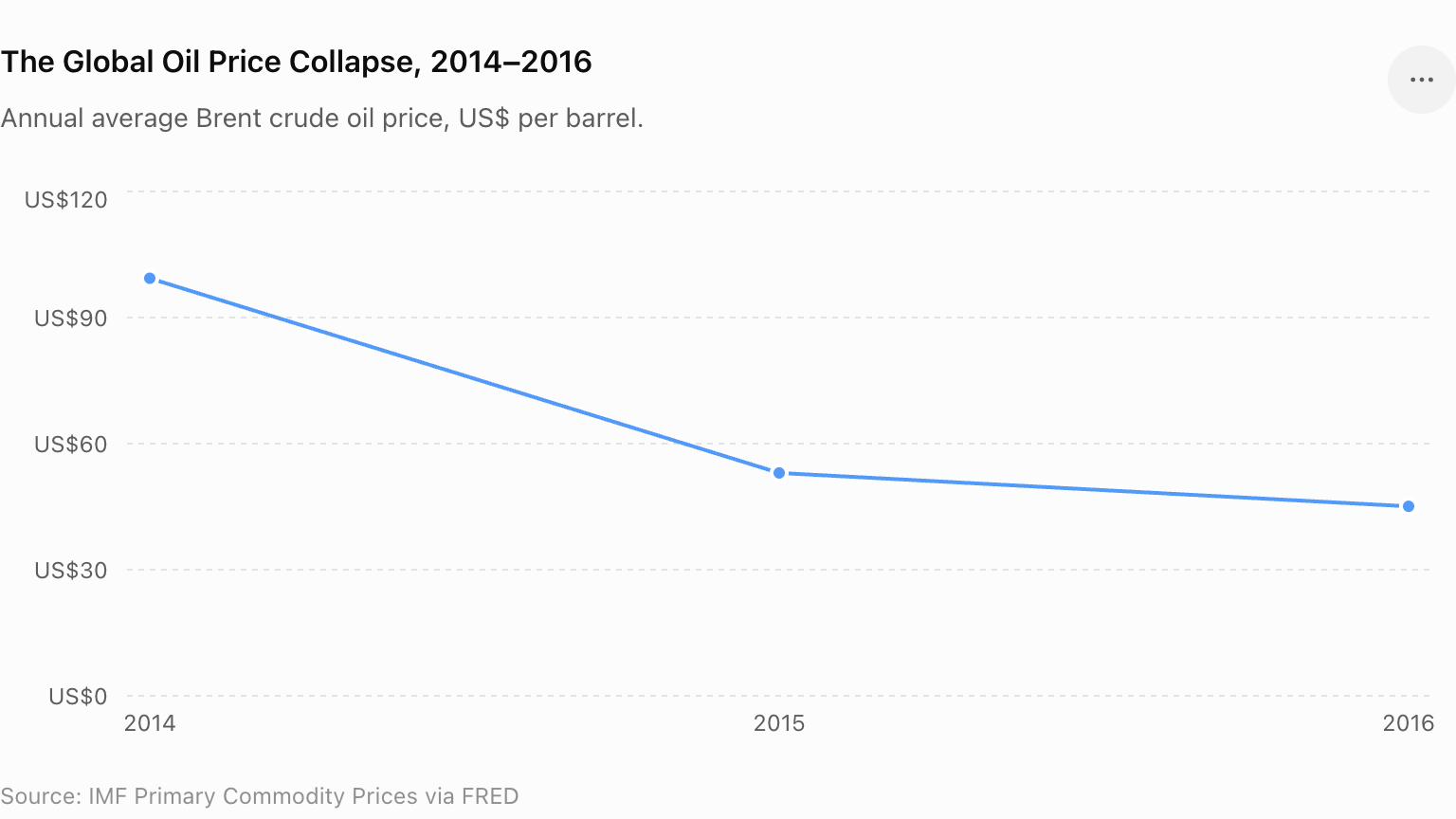
The vulnerability of this model was exposed in the mid-2010s. Global oil prices fell from over US$100 per barrel in 2014 to under US$30 by early 2016. Government revenues collapsed, GDP contracted by roughly three-quarters from 2014 to 2021, and the state lacked capacity to absorb the shock. U.S.-led sanctions from 2017 targeted the hydrocarbons sector and financial access, freezing PDVSA assets abroad and restricting oil sales. By mid-2020, oil output collapsed to roughly 400,000–500,000 bpd, an 80 percent decline. Hyperinflation peaked in the tens of thousands percent in 2018, decimating real incomes. By 2025, an estimated 7.9 million Venezuelans had emigrated, roughly 23 percent of the population. Poverty rates exceeded 70 percent, and GDP had shrunk more than 50 percent from pre-crisis levels despite modest recovery in the early 2020s. Venezuela’s collapse illustrates that resource abundance alone cannot guarantee autonomy. Control over oil created relevance but also exposure: the state became a target of coercion by dominant capitals and strategic blocs. Sanctions and financial exclusion exploited structural dependency, while mismanagement and policy choices were themselves shaped by dependence on oil rents. Resource sovereignty became fetishized: formally empowering the state, materially entangling it. Neutrality and autonomy proved fragile in a system where commodity surplus is embedded in power hierarchies favoring dominant actors.
The contrast with Singapore is instructive. Singapore’s economy is diversified, its institutions coherent, and its administrative capacity robust. Yet its integration into global capital circuits constrains its neutrality similarly: structural dependence on external demand, investment, and technology limits sovereignty. Both cases illustrate that formal sovereignty — legal recognition, independent institutions, and territorial control — cannot substitute for material autonomy rooted in productive capacity, technological capability, and leverage in global accumulation networks. Peripheral states are structurally constrained, whether by overexposed dependence (Singapore) or mono-commodity resource reliance (Venezuela). These cases underscore a broader structural truth: neutrality without autonomous productive capacity is contingent, not guaranteed. Whether through external integration or resource concentration, states may achieve visibility, influence, or temporary autonomy, yet remain subject to pressures imposed by dominant capitals and great powers. The Marxist perspective makes explicit the link between accumulation, dependency, and sovereignty: productive forces, class power, and structural position in the world system determine the capacity for genuine independence.
Singapore and Venezuela thus exemplify the dual paradox of peripheral states in global capitalism. Singapore’s wealth and administrative sophistication mask dependence; Venezuela’s resource abundance masks vulnerability. Both demonstrate that the capacity to sustain neutrality, autonomy, or strategic maneuvering is materially conditioned, not legally or rhetorically secured. Structural leverage, diversification, and internal productive capacity — not treaties, diplomatic skill, or resource endowments alone — determine the limits of sovereignty and the viability of neutrality within the capitalist world order.
Sanctions, Finance, and the New Instruments of Hegemony
The contemporary global order demonstrates that formal sovereignty and neutrality are increasingly circumscribed by the material structures of accumulation, dependency, and global power hierarchies. Instruments of coercion and influence have evolved far beyond the cannon, the treaty, or the traditional balance-of-power framework. In an era defined by deep financial integration, global supply chains, and pervasive private capital, hegemonic power is exercised as much through economic statecraft — sanctions, trade controls, investment screening, financial exclusion, and technology embargoes — as through direct military confrontation. These instruments operate within the logic of world capitalism, shaping state behavior without the need for declarations of war, revealing that neutrality is rarely a sovereign posture in itself, but a relational position defined by structural dependencies and asymmetric power.
The cases of Singapore and Venezuela, despite stark differences in their economies, political histories, and resource endowments, illustrate this reality. Both states are constrained by the dependencies inscribed through global accumulation, limiting their capacity to pursue autonomous policies, whether in foreign relations or domestic development. Neutrality, in both cases, is contingent: it is sustainable only insofar as it does not threaten the core interests of dominant actors in the capitalist world system. The uneven development intrinsic to global capitalism concentrates industrial and financial capacity in specific regions while integrating peripheral and semi-peripheral economies through specialization, primary commodity exports, or intermediary roles in production networks. This structural unevenness produces differentiated capacities for autonomous action: states in the core exercise substantive independence, while those at the periphery operate under conditional autonomy, constrained by the imperatives of capital accumulation controlled externally.
Singapore’s position exemplifies how structural dependence can shape the scope of neutrality even for a wealthy, administratively capable state. With a GDP per capita approaching US$90,000 in 2024, the city-state ranks among the world’s richest societies by conventional metrics. Its economy is highly open, with total trade exceeding 300 percent of GDP, and sectors such as wholesale trade, finance, and electronics driving real GDP growth of 4.4 percent in 2024. Singapore is deeply integrated into global capital circuits: foreign-owned firms, while constituting only about 20 percent of registered businesses, employ nearly a third of the workforce and dominate higher-wage segments. Exports and foreign investment account for the bulk of economic throughput, reflecting the city-state’s role as a platform economy for multinational capital rather than a fully autonomous domestic accumulation regime.
 Singapore’s growth model emphasizes the extensive rather than the intensive. Non-resident labor accounts for roughly 39 percent of the workforce, up from 25 percent in the late 1990s. The labor share of national income remains below 43 percent, with high compulsory savings and asset-based welfare policies suppressing domestic demand. Household consumption, at around 36 percent of GDP in 2024, is strikingly low for an advanced economy, demonstrating that much of the value generated is externalized or captured by capital rather than circulated internally. Total factor productivity growth, particularly in services where most residents work, has consistently lagged OECD peers, averaging under 1 percent in the decade preceding the pandemic. These patterns reveal that Singapore’s wealth and economic sophistication coexist with a structural dependency on external capital, markets, and geopolitical stability. Neutrality, therefore, is less an expression of independent agency than a strategic management of vulnerabilities: balancing ties with both the United States and China to preserve economic integration and avoid punitive consequences from either side. Singapore’s position as a global financial center further illustrates the vulnerability embedded in contemporary accumulation networks. U.S.-led controls on technology exports, banking regulation, and financial standards, along with shifts in China-centric supply chains, compress the space for autonomous decision-making. Even as Singapore projects a posture of pragmatic neutrality, it is operating within a corridor defined by dependencies: its open economy, dollar-linked financial networks, and reliance on both U.S. and Chinese demand constrain sovereign discretion. Neutrality, in this sense, is a structural maneuver within the constraints imposed by global capital rather than a freely chosen diplomatic posture.
Venezuela presents a different but complementary illustration of structural dependency and its consequences. Despite holding the world’s largest proven oil reserves — approximately 303 billion barrels — the country has experienced extreme vulnerability to external coercion and economic instability. Oil accounted for roughly 90–95 percent of total exports and a comparable share of foreign exchange receipts before the crisis. Chávez’s Bolivarian Revolution attempted to convert resource wealth into redistributive and sovereign capacity, with PDVSA revenues financing social programs, public housing, healthcare, and education. These policies yielded measurable improvements in literacy, life expectancy, and poverty reduction. Yet the economy remained mono-commodity dependent.
This vulnerability was starkly exposed during the 2014–2016 global oil price collapse, when Brent crude fell from over US$100 per barrel to under US$30. The contraction of export earnings, combined with fiscal dependence on a single commodity, produced a catastrophic crisis. GDP contracted by 70–80 percent between 2013 and the early 2020s, oil output fell from over 3 million bpd to below 1 million bpd, and hyperinflation reached hundreds of thousands percent annually in 2018. By 2025, roughly 23 percent of the population had emigrated, and poverty rates reached unprecedented levels. Sanctions imposed by the United States and allied financial actors exacerbated these structural dependencies. Measures targeting PDVSA, the central bank, and other intermediaries restricted access to international finance and global markets. Secondary sanctions, financial exclusion, and trade constraints amplified dependency, making sovereign control over the resource base simultaneously more salient and more constrained. The Venezuelan example underscores a paradox: resource sovereignty does not automatically translate into structural autonomy. Instead, the state becomes embedded in global accumulation circuits controlled externally, and attempts to assert independence through social spending, nationalization, or policy autonomy can provoke coercive countermeasures. Neutrality or independent policy becomes structurally unviable in a system organized to enforce hierarchy and dependency.
Singapore and Venezuela thus reveal two distinct modalities of structural constraint. Singapore is outwardly diversified and administratively sophisticated, yet its deep integration into global capital, labor, and technology flows produces dependencies that constrain neutral action. Venezuela, by contrast, is resource-rich but narrowly specialized, making it highly exposed to external coercion through sanctions, financial exclusion, and market dependency. In both cases, formal sovereignty — legal independence, territorial control, and institutional capacity — is insufficient to ensure strategic autonomy. Autonomy depends on material capacity: diversified productive forces, technological capability, leverage in international accumulation networks, and the ability to insulate core economic functions from coercive instruments of dominant powers. The contemporary global system magnifies these dynamics through instruments of financial and technological hegemony. Economic statecraft — tariffs, sanctions, investment restrictions, export controls, and currency leverage — creates asymmetric exposure across the world-system hierarchy. Advanced states with diversified economies, reserve currencies, and financial depth can weather shocks and coercive pressure. Peripheral and semi-peripheral states, integrated through specialized production or mono-commodity export dependency, face heightened vulnerability. In this context, neutrality emerges less as a moral or legal posture than as a contingent, negotiated position: a function of the state’s embeddedness in global accumulation networks.
Singapore’s careful management of its U.S.–China relations illustrates how sophisticated states navigate this structural terrain. Its security alignment with the United States, coupled with deep commercial ties to China, exemplifies neutrality as an exercise in dependency management: a strategy of preserving access to critical markets, technology, and investment flows while avoiding punitive measures from dominant powers. Similarly, Venezuela’s efforts to assert resource sovereignty through PDVSA were thwarted by the asymmetries of financial and energy-market control, demonstrating that autonomy is materially conditioned. Neutrality and sovereignty are effective only where structural capacity allows them to be enforced; otherwise, they remain contingent and vulnerable to disruption. As such, accumulation regimes, class structures, and integration into global circuits of production and finance determine the space of possible action. Singapore’s wealth and institutional coherence, and Venezuela’s resource abundance, do not guarantee independence; they simply shape the modalities of dependency. Peripheral states, whether export-oriented entrepôts or mono-commodity petrostates, must navigate a global system in which hegemonic actors exert coercive influence through financial and economic instruments. Neutrality is therefore neither absolute nor inherently protective; it is a relational, contingent outcome of position within the hierarchical world system.
Structural Dependency: Capital Or Coercion?
Neutrality in the modern global order is not a simple strategic posture or rhetorical claim divorced from material conditions. It is instead a position negotiated within the uneven architecture of world capitalism, where accumulation, class power, and geopolitical hierarchies shape the possibilities and limits of state action. The experiences of states such as Singapore and Venezuela illustrate this starkly: formal declarations of non-alignment or sovereign independence are hollow unless undergirded by diversified productive capacity, broad internal markets, and autonomous control over key financial and economic levers. Where such structural foundations are absent, neutrality becomes managed vulnerability — a compelled navigation through dependency rather than an assertion of independent agency.
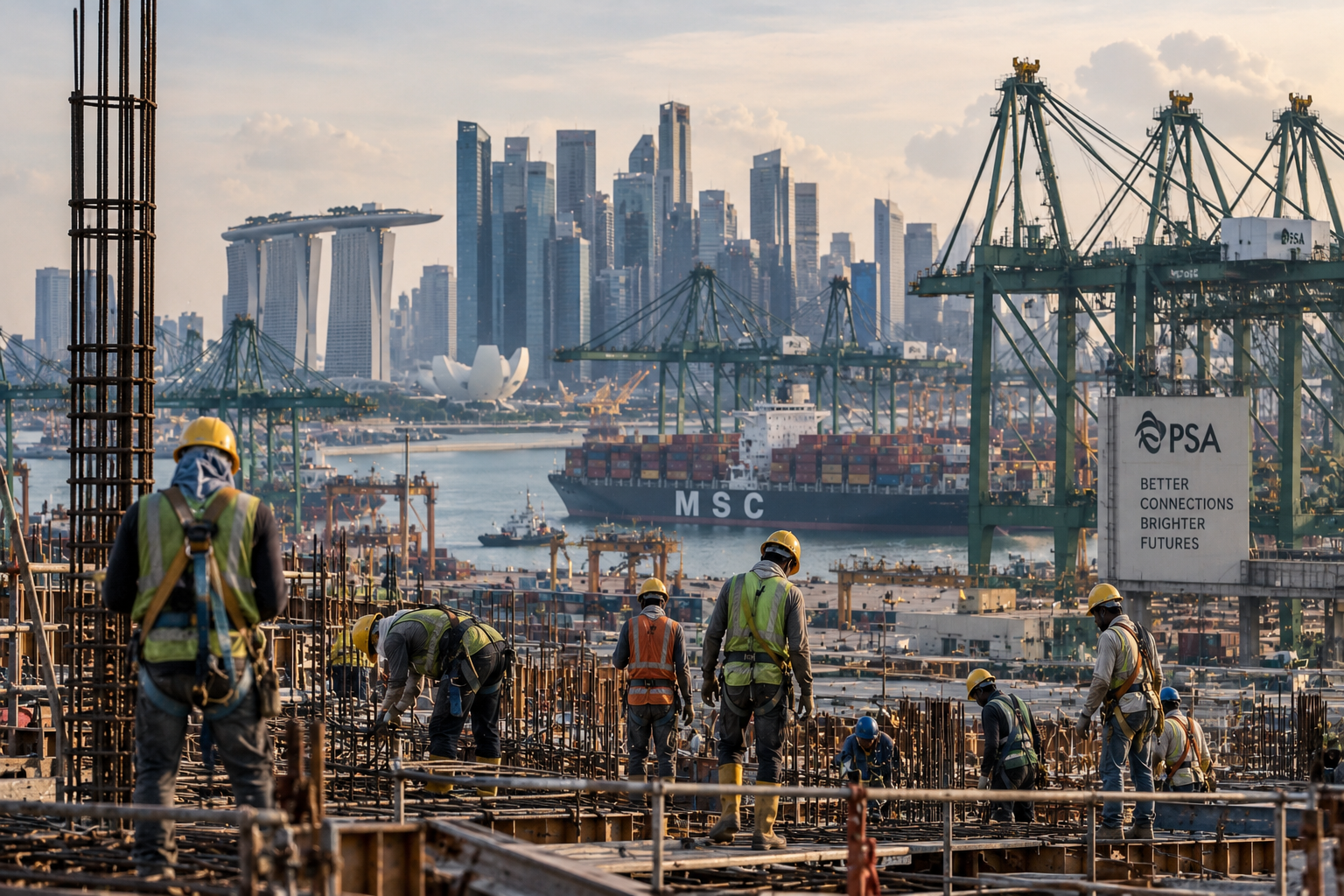
Singapore exemplifies this constraint in a particularly instructive form. Official statistics present the city-state as one of the wealthiest economies globally, with GDP per capita nearing US$90,000 in recent years, and foreign direct investment inflows reaching S$13.5 billion in 2024, concentrated in sectors such as semiconductors and biomedical manufacturing. Its outward-facing growth model, with trade exceeding three times its GDP, places it among the most globally integrated economies on the planet. Yet this integration masks deeper structural dependencies that fundamentally condition what neutrality means in practice.
Economic expansion in Singapore has relied heavily on continuous inflows of foreign capital and labor. Expatriate labor, a central pillar of production, illustrates the city-state’s weak endogenous capacity: non-resident workers constitute a large proportion of the workforce, sustaining output while reflecting the limited reproduction of domestic productive forces. The labor share of national income has declined relative to capital, while domestic consumption remains low, at approximately 36 percent of GDP — a strikingly small figure for an advanced economy. These patterns underscore a production model oriented principally toward export accumulation rather than internal circulation. Singapore’s neutrality in geopolitical tensions — particularly the intensifying U.S.–China rivalry — is therefore less an ideological posture than a structural necessity. The city-state navigates a delicate balancing act: maintaining strong economic ties to both great powers while avoiding alignment that might trigger punitive economic measures. Its strategic mantra, “friend to all, ally to none,” is an operational response to structural dependencies rather than an expression of sovereign detachment. Singapore’s financial sector, critical logistics infrastructure, and export-oriented manufacturing are highly sensitive to fluctuations in global demand, financial conditions, and regulatory shifts in key economies. Neutrality, in practice, becomes synonymous with managing these dependencies, as continued economic reproduction depends upon sustained integration into circuits of global capital, trade, and investment controlled by external actors. While the city-state retains impressive administrative capacity and legal sovereignty, its autonomy is circumscribed by the structural imperatives of global accumulation.
 Venezuela demonstrates the other side of this spectrum. Despite holding the world’s largest proven crude oil reserves — estimated at approximately 303 billion barrels — the country has experienced acute vulnerability to external coercion and economic collapse. Oil exports historically provided the overwhelming majority of foreign exchange earnings and public revenue. By 2024, oil continued to constitute a substantial portion of the government budget, highlighting the persistent dependency on a single commodity. Such concentration produces structural vulnerability: the economy’s productive base is narrow and tied to global commodity cycles and the strategic imperatives of external capital. When global oil prices collapsed in the mid-2010s, Venezuela’s GDP contracted sharply, shrinking by as much as three-quarters between 2014 and 2021. U.S.-led sanctions and restrictions on PDVSA and access to international finance amplified this collapse. Modern instruments of hegemonic power — financial exclusion, trade embargoes, secondary sanctions, and restrictions on international partners — effectively weaponize economic interdependence to constrain sovereign action. Analyses suggest that sanctions and restricted financial access accounted for over half of Venezuela’s GDP contraction between 2012 and 2020, demonstrating how dependency can be leveraged as coercion. The sharp decline in oil exports, coupled with underinvestment in non-oil sectors, generated systemic collapse. Venezuela’s oil output, historically exceeding 3 million barrels per day, fell to fractions of this level as sanctions limited market access and deterred investment. Hyperinflation reached hundreds of thousands percent in 2018, and shortages of basic commodities, coupled with mass emigration, deepened social vulnerability. Venezuela’s trajectory illustrates a paradox of resource sovereignty: the very concentration of productive capacity that provides leverage within the global economy simultaneously exposes the state to coercion when external powers can manipulate access to finance, markets, or technology.
Singapore and Venezuela thus present complementary case studies of structural dependency under capitalism. Singapore — wealthy, globally integrated, and administratively sophisticated — is nevertheless constrained by external capital flows, market access, and geopolitical alignments. Venezuela, resource-rich but narrowly specialized, is acutely vulnerable to external coercion through sanctions, financial exclusion, and dependency on oil markets. Both cases confirm a reading of sovereignty and neutrality: formal independence alone is insufficient for autonomy. Structural leverage, embedded productive capacity, and control over the circulation of capital and surplus are decisive in defining the space for sovereign action. These dynamics are intensified by the evolution of global instruments of power. Economic statecraft — sanctions, export controls, financial regulation, and trade penalties — has become a central mechanism through which great powers exercise coercion in the absence of military conflict. Control over key financial infrastructure, such as dollar-denominated clearing systems and international credit networks, provides leverage that can destabilize domestic currencies, reduce import capacity, and inhibit investment in dependent economies. States lacking diversified productive capacity or access to alternative markets are particularly exposed, illustrating that neutrality in modern capitalism is not an assertion of sovereign freedom but a continual negotiation with structural conditions and hegemonic instruments.
Singapore’s careful management of its U.S.–China relations exemplifies this: neutrality is an ongoing tactical endeavor to preserve market access, investment inflows, and financial stability, rather than an unmediated expression of state authority. Similarly, Venezuela’s attempts to assert control over its resource base through PDVSA were constrained and partially undermined by the external instruments of capitalist hegemony. In both cases, the effective exercise of sovereignty requires material leverage. States that lack diversified productive capacity, robust domestic demand, or control over key financial instruments confront limits to neutrality and autonomy that are structural, not merely political. It is neither absolute nor intrinsically protective. It is a relational position defined by accumulation patterns, structural dependency, and exposure to the instruments of global capital. Peripheral and semi-peripheral states operate within a hierarchical division of labor, where the control over productive forces, access to finance, and leverage in global trade networks determine the feasible scope of action. Neutrality becomes a contingent, negotiated strategy: for Singapore, a careful calibration within global finance and trade; for Venezuela, an aspiration repeatedly constrained by its integration into externally dominated commodity circuits. Formal sovereignty, therefore, is a necessary but insufficient condition for autonomous action in the global capitalist order. Autonomy depends on the material foundations of the economy, and the strategic capacity to manage, buffer, and negotiate dependency in the face of coercive instruments wielded by dominant powers.
Beyond Diplomatic Postures: From Tactical Neutrality to Structural Autonomy
Neutrality in the modern global order is not a simple strategic posture or rhetorical claim divorced from material conditions. Rather, it is a position negotiated within the uneven architecture of world capitalism, where accumulation, class power, and geopolitical hierarchies define the possibilities and limits of state action. The experiences of Singapore and Venezuela illustrate this starkly: formal declarations of non-alignment or sovereign independence are hollow unless undergirded by diversified productive capacity, broad internal markets, and autonomous control over key financial and economic levers. Where such structural foundations are absent, neutrality becomes managed vulnerability — a compelled navigation through dependency rather than an assertion of independent agency.
Singapore exemplifies this constraint. On paper, the city-state appears extraordinarily prosperous, with GDP per capita approaching US$90,000 in recent years and foreign direct investment commitments rising alongside fixed asset investment, which climbed to S$13.5 billion in 2024, concentrated in semiconductors, biomedical manufacturing, and advanced logistics. Its outward-facing growth model, with trade exceeding three times its GDP, places it among the most globally integrated economies in the world. Yet this enviable integration masks deeper structural dependencies that condition the practical meaning of neutrality. This pattern embeds Singapore deeply within circuits of global capital while limiting its autonomous capacity to shape the terms of that integration.
Neutrality in the intensifying U.S.–China rivalry is not an expression of sovereign detachment but an adaptive strategy conditioned by external dependencies. Singapore pursues a careful balancing act: it maintains strong economic links with both great powers while avoiding overt alignment that could provoke punitive economic measures. Its strategic posture, “friend to all, ally to none,” reflects structural necessity rather than ideological choice. The city-state’s financial sector, critical logistics infrastructure, and export-oriented manufacturing depend on stable access to international markets and capital flows, making it highly sensitive to fluctuations in global demand and financial conditions. In practice, neutrality for Singapore is synonymous with managing external dependencies, insofar as its economic reproduction requires continued integration into a world system dominated by powerful actors who can alter capital and goods flows to shape political outcomes.
In contrast, Venezuela’s trajectory underscores how dependency can be weaponized through economic instruments, rendering neutrality even more precarious. Once emblematic of the resource-rich periphery within the world system, Venezuela’s economy has remained overwhelmingly dependent on oil exports, which for decades accounted for the majority of foreign exchange earnings and public revenue. Even by 2024, oil continued to underwrite a significant portion of the government budget, illustrating a persistent reliance on a single commodity. This concentration of productive capacity is itself a form of dependency: a narrow economic base tied to global price cycles and international capital. When global oil prices collapsed in the mid-2010s, Venezuela’s GDP contracted by as much as three-quarters between 2014 and 2021. The imposition of targeted U.S. sanctions, restrictions on PDVSA, and limits on access to international finance exacerbated the crisis.
These cases demonstrate that neutrality within the global capitalist order is fundamentally shaped by structural conditions of dependency and uneven development. It cannot be understood as a simple refusal to align with contending powers; it is contingent on a state’s position within the hierarchical division of labor, its control over surplus and productive capacity, and its access to alternative economic lifelines. For Singapore, whose prosperity is tied to global flows of capital, investment, and trade, neutrality is a tactical adjustment to preserve integration and favorable access. For Venezuela, whose economic base was undiversified and externally vulnerable, attempts to assert control over its resources triggered coercive responses that effectively negated meaningful independence.
Moreover, the instruments of modern hegemony — sanctions, financial exclusion, trade penalties, and technology controls — operate through the internal logic of capital accumulation. They are embedded in the structure of global markets, payment systems, and supply chains. Access to key financial infrastructure, such as dollar-denominated clearing systems and international credit markets, becomes a vector of influence. Exclusion from these systems can destabilize currency values, reduce import capacity, and erode domestic productivity. This is particularly true for states that have not cultivated broad domestic productive bases or diversified export sectors, leaving them exposed to shifts in global economic policy and geopolitical competition. In essence, neutrality becomes a form of managed vulnerability in a world where capital crosses borders with greater ease than political authority can assert control. The ability to maintain neutrality depends on a state’s capacity to build internally rooted productive forces, diversified industries, technological bases, and robust domestic demand to cushion external shocks and reduce reliance on external actors. These conditions have historically been elusive for many structurally dependent states within the capitalist world system, making genuine autonomy rare.
Ultimately, the cases of Singapore and Venezuela illustrate that sovereignty and neutrality are not simply matters of legal or diplomatic posture. They are deeply conditioned by material structures of accumulation and dependency. A state may possess wealth, administrative sophistication, or even nominal strategic importance, yet without structural autonomy — diversified productive capacity, control over key economic levers, and internal social and political agency — neutrality is a fragile and contingent status. In contemporary capitalism, formal sovereignty is necessary but insufficient for autonomous action; true structural autonomy remains the exception rather than the rule, and states must continuously negotiate the pressures of global capital, asymmetric power, and hegemonic instruments.
From Formal Sovereignty to Material Autonomy: Reconfiguring the Terms of Independence
The paradox confronting small states in the contemporary world is neither abstract nor rhetorical; it is materially embedded in the structures of global capitalism and the asymmetric distribution of productive power. Neutrality, often invoked in diplomatic language as a moral or legal posture, is rarely more than a formal declaration. Its protective capacity is contingent upon the material conditions of the state, which are in turn determined by class relations, productive autonomy, and integration into global accumulation circuits. The historical trajectories of Belgium, Laos, and Cambodia, alongside contemporary experiences in Singapore and Venezuela, illustrate with precision the limitations of formal sovereignty in the absence of substantive, internally rooted structural power.
Belgium, in the early twentieth century, epitomized the vulnerability of neutrality when confronted with the imperatives of military-industrial capitalism and imperial rivalry. The nation’s formal neutrality, guaranteed by the Concert of Europe, could not withstand the demands of Germany’s Schlieffen Plan in 1914. Here, the small state’s sovereignty was subordinated to the strategic calculations of contending powers, revealing the structural reality that territorial guarantees alone are insufficient in an international order organized around the logic of capital accumulation and strategic prerogatives of great powers. Similarly, the fate of Laos and Cambodia in the postcolonial period exposes the fragility of declarative neutrality. Following the 1954 Geneva Accords, both countries were formally recognized as neutral in the emerging Cold War system, yet the structural dependencies imposed by their limited productive capacity, underdeveloped institutions, and reliance on external security guarantees rendered them highly susceptible to coercion and violent intervention. Laos became the most heavily bombed country per capita in recorded history, while Cambodia endured systematic aerial bombardment and destabilization campaigns in the late 1960s and early 1970s. Neutrality, in these cases, was not a shield; it was a positional relation within a hierarchical international system dominated by capitalist imperatives and the strategic interests of the United States and the People’s Republic of China.
The contemporary examples of Singapore and Venezuela further underscore the inseparability of formal sovereignty and material autonomy. Singapore, with a nominal GDP per capita surpassing US$80,000 and foreign reserves exceeding S$400 billion, presents as an economically sophisticated, diplomatically adroit, and ostensibly neutral actor in the context of U.S.–China rivalry. Its strategic neutrality is facilitated through ASEAN membership, engagement with the Belt and Road Initiative, and calibrated participation in regional security architectures. Yet beneath this veneer of autonomy lies a set of structural constraints characteristic of peripheral integration into global capitalism. Non-residents constitute approximately 39 percent of Singapore’s total labor force as of 2023, while the nation’s trade-to-GDP ratio remains above 170 percent, underscoring deep dependence on external markets and capital flows. Household consumption hovers at 36 percent of GDP, low by advanced economy standards, reflecting an economic configuration in which domestic productive autonomy is subordinated to the imperatives of externally mediated accumulation. In other words, Singapore’s prosperity is profoundly contingent upon structural dependence, and its neutrality is less a sovereign posture than a managed navigation of asymmetric pressures.
 Venezuela’s experience exemplifies the converse dynamic, where attempts at materially grounded autonomy encounter the countervailing forces of capitalist hegemony. Despite possessing the world’s largest proven oil reserves — over 300 billion barrels — Venezuela’s economic sovereignty was structurally constrained by mono-commodity dependence and the geopolitical significance of its resource wealth. By 2013, petroleum accounted for approximately 95 percent of export revenues and nearly 40 percent of government revenue. The Chávez administration’s nationalization of PDVSA and subsequent social programs represented a conscious attempt to leverage resource wealth for domestic redistribution and the construction of a productive base independent of U.S. and multinational capitalist circuits. Yet from 2014 onwards, sanctions, financial exclusion, and targeted economic pressures by dominant powers precipitated a contraction exceeding 70 percent of GDP by 2020. Hyperinflation, currency collapse, and mass emigration followed, with more than 7 million citizens leaving the country, revealing the structural limits of sovereignty within the capitalist world system. Resource dependence without broader industrialization and diversified productive capacity rendered the Venezuelan state materially vulnerable; neutrality, in this case, was rendered operationally irrelevant by asymmetric coercion.
These cases collectively illustrate that neutrality is not a formal or juridical category but a material relation defined by class power, productive forces, and structural integration into global accumulation. The circulation of capital produces uneven development: core regions concentrate surplus and technological capability, while peripheral regions, even when formally independent, are dependent on external capital, markets, and security guarantees. This dependency generates asymmetric risks, wherein the capacity of a small state to act independently is inversely proportional to its reliance on transnational accumulation circuits. In Singapore, the reliance on imported labor, foreign capital, and global supply chains ensures that strategic neutrality is contingent on accommodation with competing powers. In Venezuela, dependence on oil exports without a diversified domestic productive base rendered sovereignty precarious once challenged by external sanctions and financial isolation.
Quantitative measures further elucidate these dynamics. In Singapore, the ratio of non-resident to resident labor has doubled since 2000, from approximately 20 percent to 39 percent, while total factor productivity growth has stagnated at near zero in the services sector since 2010. By contrast, GDP per capita has increased, reflecting growth driven by factor accumulation rather than productivity enhancement. In Venezuela, oil dependence as a share of exports remained above 90 percent between 2000 and 2013, even as industrial diversification failed to keep pace, leaving the economy exposed to global price fluctuations and policy sanctions. Both cases reveal the structural contradictions inherent in formal sovereignty: wealth and administrative competence do not automatically confer material autonomy. The construction of a genuinely autonomous state requires the cultivation of internal productive capacity, the diffusion of technological and human capital, and the redistribution of class power to enable participation in economic governance. Structural autonomy, in this Marxist sense, implies the capacity of subordinate classes to participate in production, innovation, and decision-making processes that determine the allocation of surplus. Without these conditions, neutrality remains a brittle status, contingent on the tolerance of dominant external actors. The historical record of Belgium, Laos, and Cambodia demonstrates the consequences of insufficient autonomy in wartime and during Cold War contests; Singapore and Venezuela illustrate the contemporary dynamics under global capitalist integration, where neutrality is simultaneously a tactical stance and an operationally constrained relation within asymmetric networks of accumulation.
The policy implications of this analysis are profound. Small states seeking genuine independence must cultivate diversified industrial bases, invest in human capital broadly rather than narrowly, and reduce overreliance on externally controlled labor and capital flows. Fiscal and monetary autonomy must be paired with institutional mechanisms that redistribute risk from capital to broader social strata, ensuring that collective productive capacity is expanded rather than merely administered. Strategic diplomacy, in this framework, is effective only when underpinned by structural material power: a state cannot declare neutrality without the internal resources to enforce it materially, whether through technological capability, domestic production, or social cohesion. The transition from formal sovereignty to material autonomy is the critical challenge for small states in the contemporary global system. Neutrality, without the underpinning of domestic productive capacity and class-based empowerment, is contingent, fragile, and ultimately subordinated to the imperatives of capital and great-power rivalry. The historical lessons of Belgium, Laos, Cambodia, the contemporary realities of Singapore, and the crisis of Venezuela collectively demonstrate that genuine autonomy — political, economic, and strategic — is inseparable from the development of internally rooted productive forces and the capacity of subordinate classes to participate in the generation and control of surplus. A new social compact of sovereignty must therefore integrate class power, state capacity, and international alignment in ways that transform dependence into self-determination, vulnerability into resilience, and formal neutrality into materially enforceable autonomy.
The writer is a graduate student from USM’s School of Social Science, interested in Comparative Politics, Historical Political Economy, and Chinese Politics. Prior to pursuing his undergraduate studies, he worked as a contributing researcher at political institutes and obtained a Bachelor Of Social Science (Hons) in Political Science and Philosophy from University Science Malaysia.